Amazon sellers
Spec lock, logo and carton marks, FBA prep, and a QC pass before the shipment books.
Wholesale Sourced
Practical guides for importers: how to compare suppliers, check a factory before you pay, plan inspection and shipping, and estimate landed cost.
Sourcing guidesBuyer guides for comparing suppliers, understanding fees, and planning imports.
Guides by buyer type
Spec lock, logo and carton marks, FBA prep, and a QC pass before the shipment books.
Factory-direct cost, mixed replenishment, and photos when a SKU is actually in the warehouse.
Many SKUs, one consolidator, and a calendar that survives Chinese New Year.
Prototype to first run without pretending a 5,000-piece MOQ is the only option.
WHO DOES WHAT
A factory makes the goods. A sourcing agent can compare suppliers and follow the order. The buyer still approves the specification, the sample, and whether the lot ships. These pages explain those roles.
How a shortlist, comparable quotes, and a locked spec should come together before any deposit.
License checks and site evidence that show who you are paying.
What an AQL sampling plan, photos, and a fail report should show before the balance is released.
How goods from several suppliers are received, held, and shipped as one load.
Logo, packaging, and the sample loop from prototype to first run.
Labels, carton marks, and a booking that matches Seller Central.
Where to read next
RFQ fields that make two quotes comparable.
License, registry, and bank beneficiary before a deposit.
Timing, evidence, and a release record you keep.
Goods, freight, duty, and destination charges in one worksheet.
FBA and FBM handoffs, and who chooses the unit barcode.
One schedule, late factories, and incomplete kits.
Per-order shipping, China stock, or destination replenishment.
Existing designs, changes, and a new mold, in that order.
If you are comparing a China sourcing agent, read how the role works and the fee comparison guide. Fee examples there are ways to read someone else's quote. They are not a price from this site. Worked buying notes, when a page labels them as examples, live under case studies. They are not orders this publisher fulfilled.
How an order runs
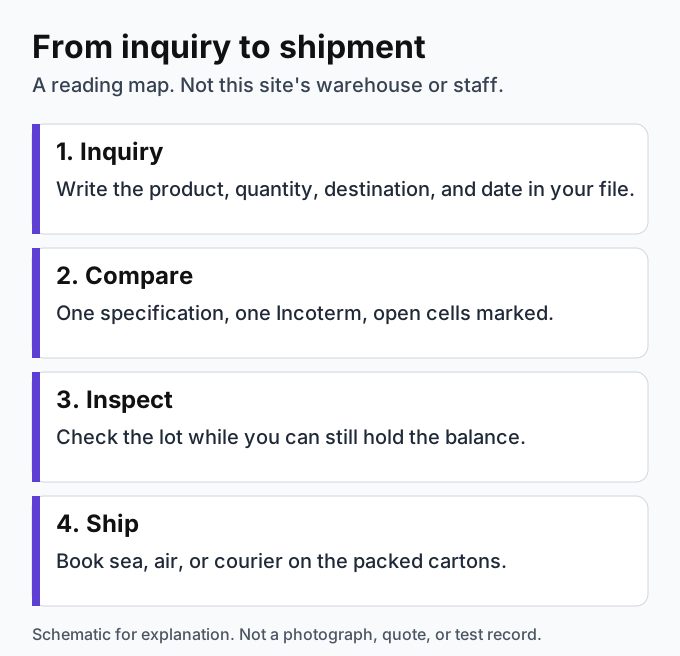
Follow the buying process from supplier research through inspection and shipping.
Read the sourcing guideStart small
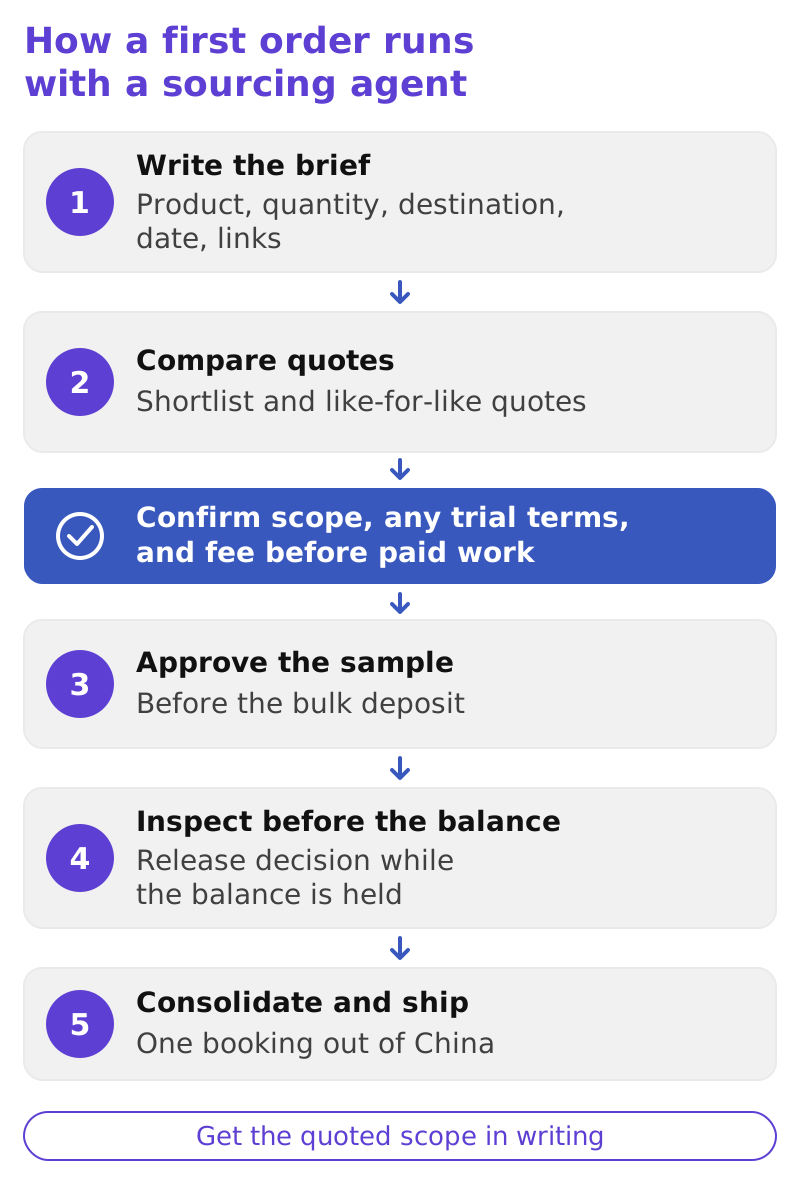
If you plan to hire a China sourcing agent, a small first order is a practical way to test it on your own product before you scale. Reviews describe other buyers' files; a small file shows how that agent handles yours. Keep the brief in your own file. This site does not take product, quantity, or destination details as an order, and it does not pay factories, prep FBA cartons, or charge a commission.
Already found the supplier? Ask whether the first file can cover only the steps you need, such as inspection or shipping. If you are new to agents, how a China sourcing agent works covers what the agent does at each stage and what stays with the buyer.
Before you authorize any paid work, ask for a written quote that states the fee, what it includes, and what it excludes. If a first-order or trial offer is mentioned, confirm in that quote whether it applies to your file and exactly what it covers; do not assume it applies until it is written down. Ask how work that only some orders need, such as laboratory testing, a repeat inspection after a failed lot, custom packaging, extra storage, and freight, will be quoted before it is ordered.
Product categories
Payment, a failed inspection, and minimum orders are on the sourcing FAQ.
Common models are a percentage of goods value, a flat fee per task, or a margin built into the product price. Ask any agent to state the fee base, what it includes, and which costs are billed separately before you authorize work.
Many agents can. Before you hand over a supplier, confirm in writing who pays the supplier and through which channel, which checks are included, and what happens if a check raises a problem.
That each unit carries the barcode your Seller Central settings require, every carton has its own box ID label, box contents match the shipment, and the lot passed inspection against the approved sample. The FBA guide lists the evidence to request.
Verify the Chinese business license (Unified Social Credit Code), matching bank beneficiary name, itemized quotation on a stated Incoterm, and signed tooling or NNN terms where custom molds apply.
Playbook
How to find suppliers, get a quote you can compare, inspect before the balance, and pick freight that matches the calendar.
Learn more about importing from China
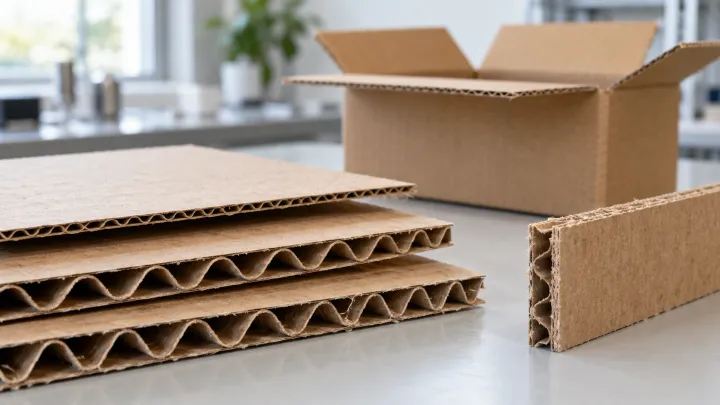
Plan export carton specifications with ECT, Mullen burst, the McKee formula, humidity testing and pallet checks. Prepare a focused packaging brief.
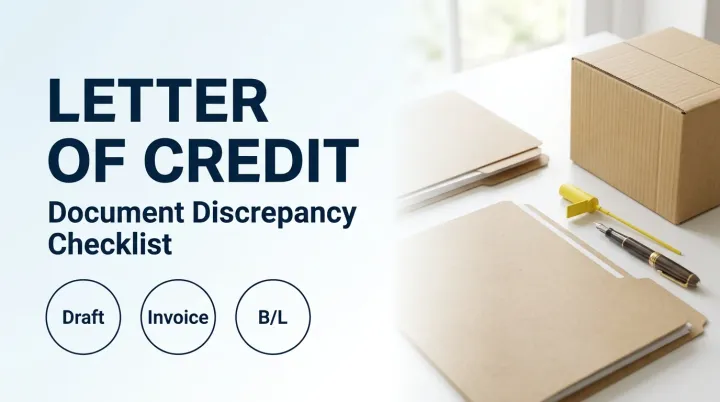
Use this letter of credit document discrepancy checklist for China imports to review draft fields, commercial invoices, packing lists, and bills of lading.
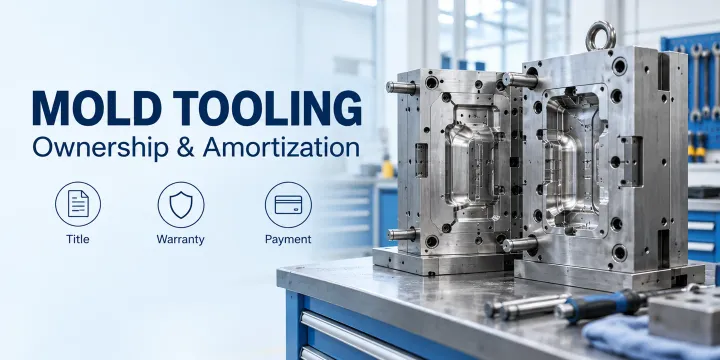
Prepare a China OEM tooling agreement: define ownership, specify steel, scope the shot-life warranty and complete a per-unit amortization schedule.
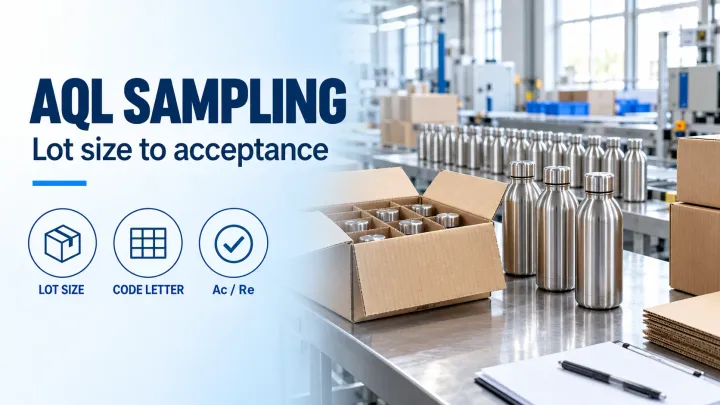
Choose an AQL sampling plan for China inspection lots: read code letters, compare 2.5 vs 4.0, follow table arrows, and distinguish Level II from S-3.
Compare sourcing agent fees and trading-company prices using itemized quotes, commission disclosures, tooling ownership and conditional landed-cost examples.
Comply with 19 U.S.C. 1304 and 19 CFR 134 Made in China label rules: unit vs carton marks, 134.46 U.S. address triggers, CBP Form 4647, and 10% marking duty.
Buyer resources
Compare sourcing agent fees, prepare supplier questions, and estimate your landed cost.