Direct answer
Arrange pre-shipment inspection when production is complete and most goods are packed, but before final payment or shipping release. Give the inspector the purchase specification, approved sample, defect classifications, packaging requirements, and test methods. Use random sampling and the agreed acceptance limits, then hold, rework, re-inspect, or release the lot from documented evidence.
Key takeaways
- Book the inspection early enough to leave time for rework before the vessel or delivery deadline.
- Give the inspector a controlled specification and defect list; the factory's verbal explanation is not the inspection standard.
- Keep the lot and remaining payment on hold until the report and any required corrections are complete.
A pre-shipment inspection is the last practical product-control gate before an order becomes an international freight problem. Its purpose is not to produce reassuring photos. It is to collect enough traceable evidence for the buyer to release, hold, rework, or reject the lot.
Inspect at the right production stage
For a final random inspection, the order should normally be complete and most units packed. That allows the inspector to check finished products, retail packaging, carton quantities, labels, marks, and the actual lot presented for shipment.
Do not wait until the booked carrier is at the gate. Leave calendar space for factory sorting, replacement, repacking, and re-inspection. Add an earlier in-process check when the order has an irreversible risk such as custom color, print, coating, welding, sewing, molding, or sealed electronics. Final inspection cannot repair those steps.
Freeze the inspection reference
Send the inspection team a controlled file before the visit:
- Purchase order and SKU list
- Product specification and drawings
- Approved physical sample or dated sample photographs
- Material and component requirements
- Artwork, barcode, label, and packaging versions
- Critical, major, and minor defect definitions
- Measurement tolerances and function-test methods
- Destination or marketplace packing requirements
- Lot quantity and factory contact
If the supplier and buyer use different document versions, the inspector cannot resolve the commercial dispute on the factory floor. The buyer must identify which revision controls.
Define defects with boundary examples
The defect list should tell the inspector what to count and how serious it is. “No scratches” is often too vague. A useful rule states the affected surface, maximum size, number per unit, viewing distance, lighting, and whether a boundary sample exists.
Typical classifications are:
| Class | Meaning | Example treatment |
|---|---|---|
| Critical | Safety, legal, or serious-use risk | Commonly zero acceptance |
| Major | Likely return, failed function, wrong model, or material deviation | Counted against the major limit |
| Minor | Workmanship or appearance deviation that does not prevent normal use | Counted against the minor limit |
Classification belongs to the buyer’s quality plan. A sampling table does not decide whether a loose wire, wrong label, or color shift is critical, major, or minor.
Select cartons and units randomly
An inspection sample must represent the lot. The inspector should choose cartons from different locations in the finished-goods area rather than accept cartons prepared by the factory for inspection. Record the lot size, carton count, sampled carton numbers, unit sample, and selection method.
The current third edition, ISO 2859-1:2026, defines AQL-indexed sampling schemes for inspection by attributes and replaces the withdrawn 1999 edition. Lot size and inspection level lead to a sample-size code, and the selected AQL values give acceptance and rejection numbers for each defect class. The buyer should agree on these inputs before the visit and ensure the inspection provider is using the agreed edition.
Use a special or separate sample for destructive, time-consuming, or technical tests. Use 100% screening when a known defect must be removed from every unit. A general random sample does not guarantee every item.
Run product-specific checks
A reusable inspection sequence covers:
- Quantity and identity: SKU, model, color, order quantity, and packing status.
- Workmanship: surfaces, assembly, contamination, damage, sharp edges, loose parts, and finish.
- Dimensions and weight: recorded values against tolerances, not a visual estimate.
- Function: defined operation, cycle, load, fit, capacity, voltage, or user-flow checks.
- Components and accessories: model, quantity, manuals, cables, spare parts, and inserts.
- Retail packaging: artwork, language, barcode, warnings, seals, and protection.
- Export cartons: count, dimensions, gross weight, assortment, marks, and closure.
Laboratory compliance testing is separate. An inspector can match model numbers and collect documents or samples, but an ordinary factory visit does not replace accredited testing.
Require evidence that supports a decision
The report should identify the factory, date, purchase order, lot, sample size, specification version, and inspector. Each measurement needs a value; each function check needs conditions and a result; each defect needs a count, classification, and photograph.
Useful photos include:
- Factory sign and finished-goods area
- Random carton selection
- Open carton and unit assortment
- Measuring tool showing the value
- Function-test setup
- Defect close-up plus product context
- Unit label, barcode, and carton marks
- Sealed cartons ready for release
A report that says only “passed” or “quality good” is not sufficient evidence for payment.
Decide what happens after a fail
Place the lot on hold while the buyer reviews the report. Then document one outcome:
- Rework the affected units and re-inspect a newly presented lot
- Screen 100% for a specific defect and verify the screening result
- Replace nonconforming units or components
- Accept a named deviation under a written concession
- Reject or cancel under the purchase terms
Do not allow the factory to replace selected sample units and call the original lot corrected. The remedy must address the population that produced the failure.
Connect inspection to payment and shipping
The purchase terms should state what evidence releases the balance and who can authorize shipment. Keeping a meaningful unpaid balance is useful only when the contract and operating process permit a hold after failure.
The freight booking should also allow correction time. A nonrefundable cut-off scheduled immediately after inspection creates pressure to ignore defects. Build the inspection and rework window into the production calendar from the beginning.
For the broader system, including incoming material, production checks, defect classification, and 100% screening, use the quality control inspection guide. To commission a China-side report, see the quality inspection service.
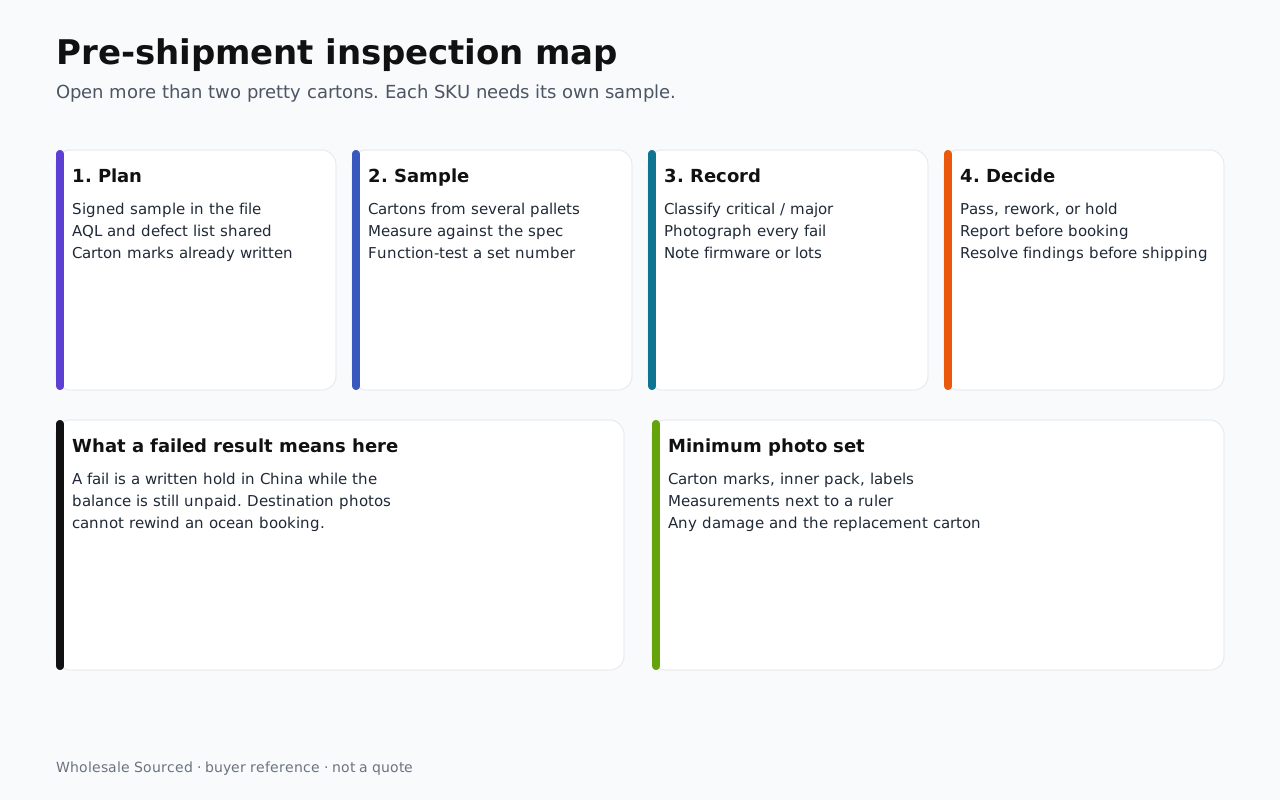
Information graphic
Frequently asked questions
When should a pre-shipment inspection happen?
For ordinary finished-goods inspection, production should be complete and roughly 80%–100% packed so the inspector can evaluate both products and export cartons. Inspect earlier as well when material, printing, coating, assembly, or another irreversible process creates significant risk.
Does the inspector open every carton and check every unit?
Usually not. Cartons and units are randomly sampled from the completed lot under an agreed plan. High-risk functions, mixed lots, small quantities, or known failure modes may require a larger sample or 100% screening.
Who decides whether a failed lot can ship?
The buyer does. The inspector reports results against the written criteria and may recommend pass, fail, or hold. The buyer decides whether to require rework, accept a documented concession, reject the lot, or authorize shipment.
Sources
- ISO 2859-1:2026 sampling procedures for inspection by attributes: International Organization for Standardization Accessed August 23, 2026.