Direct answer
Quality control for a China order begins before production: turn the product specification into measurable checks, define critical, major, and minor defects, approve a reference sample, inspect at the stages where problems can still be corrected, and keep shipment or final payment on hold until the finished lot meets the written acceptance criteria.
Key takeaways
- Product quality must be defined with measurements, tests, defect examples, and packaging requirements.
- AQL selects a sample and sets acceptance numbers; it does not decide whether a defect is serious.
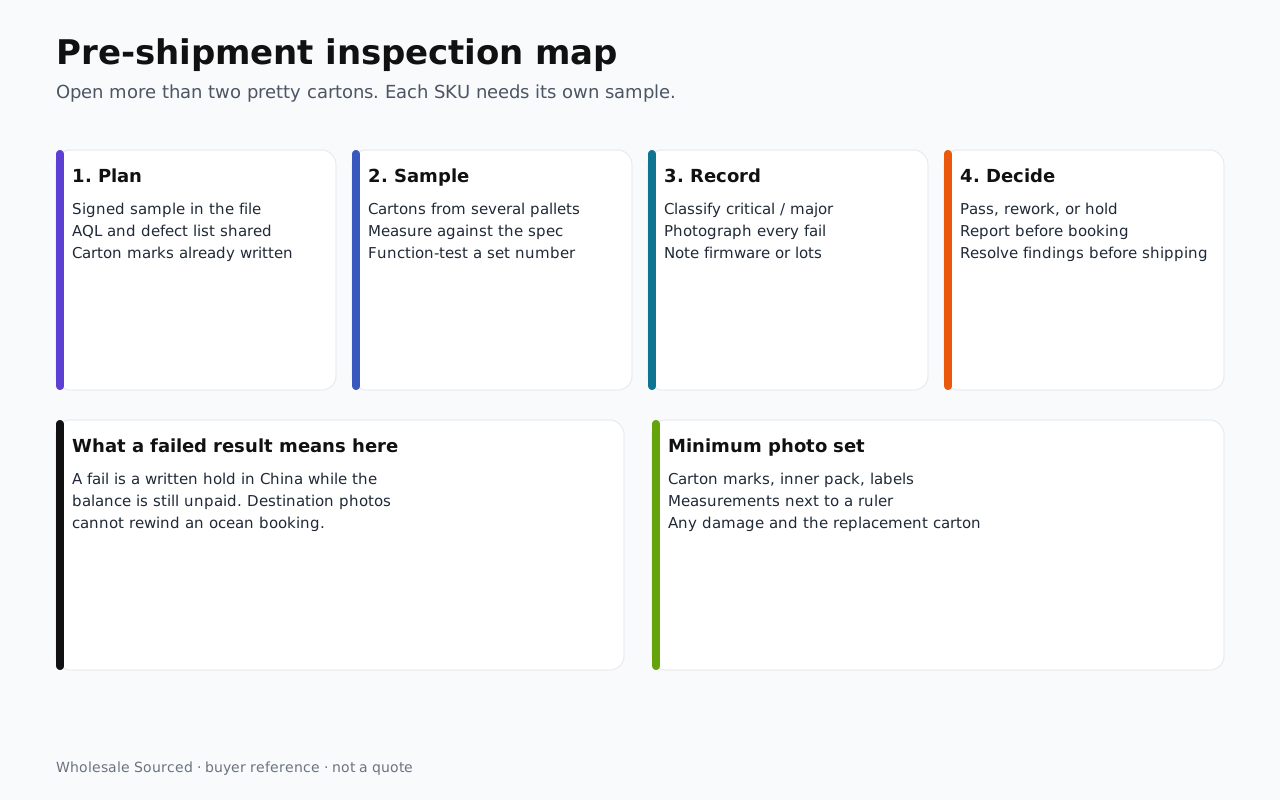
- A failed report needs a written disposition, rework evidence, and usually a re-inspection before release.
Quality control is the system that makes a purchase order inspectable. It is not a photo album produced after the factory has packed the cartons. The buyer, supplier, and inspector need the same definition of a conforming unit before material is ordered.
Start with a quality plan, not an inspection date
Translate the product specification into checks that another person can repeat. For each requirement, record the method, tool, sample quantity, and result that counts as a pass.
| Requirement | Practical check | Evidence |
|---|---|---|
| Dimensions and weight | Caliper, gauge, scale, or fixture | Recorded values and tolerance result |
| Material or component | Supplier document plus physical or laboratory check where needed | Document number, model, batch, or test result |
| Appearance | Approved color, finish, print, and defect samples | Side-by-side photos under consistent light |
| Function | Defined cycle, load, voltage, fit, or performance test | Test conditions and observed result |
| Packaging | Unit pack, barcode, labels, carton quantity, marks, and protection | Photos of opened and sealed cartons |
“Good quality” cannot be inspected. “No sharp edge; lid closes with less than 20 N; logo centered within 2 mm; 12 units per carton” can be inspected.
Classify defects before production
Use three business categories and attach product-specific examples:
- Critical: could make the product unsafe, unlawful, or unusable in a way that creates serious risk. Buyers commonly set acceptance at zero.
- Major: likely to cause a return, failed function, missing feature, wrong model, or material deviation.
- Minor: does not prevent normal use but departs from the approved appearance or workmanship standard.
The same scratch can be minor on an unseen bracket and major on a polished retail surface. The checklist must explain location, size, and severity with photos or boundary samples.
Control the sample and revision
The approved sample is useful only when it has an identity. Mark the date, version, material, artwork revision, and any deviations that were accepted. Keep the matching drawings, color references, packaging proof, and firmware or app version with it.
If the supplier changes a component because the original is unavailable, the change must return to the buyer for approval. An equivalent component is a proposal, not permission.
Choose inspection stages by reversibility
Inspect early when a defect becomes expensive or impossible to correct later.
Incoming material or pre-production check
Use this for high-risk material, branded components, custom colors, batteries, fabrics, coatings, or anything with a long replacement lead time. Confirm that the factory received the same input that was quoted and sampled.
During-production inspection
Use it when the process itself can drift: printing, sewing, assembly fit, coating, molding, firmware loading, or multi-week production. An early finding can stop the remaining quantity from repeating the defect.
Pre-shipment inspection
Inspect when the order is substantially complete and enough units are packed to evaluate finished goods and export cartons. This is the main release gate for many ordinary consumer products. The detailed timing and report structure are covered in pre-shipment inspection in China.
Container loading check
Use it when carton count, loading condition, seal number, moisture protection, or handling is a material risk. It verifies what entered the container; it does not replace product inspection.
Use AQL for sampling, not judgment
The current third edition, ISO 2859-1:2026, defines AQL-indexed sampling schemes for inspection by attributes and replaces the withdrawn 1999 edition. The lot size, inspection level, and selected AQL determine how many units are examined and how many classified defects can be accepted. The purchase order or inspection brief should identify the edition and sampling plan so the buyer and inspector do not rely on different tables.
AQL does not:
- Define critical, major, or minor defects
- Prove every unit is conforming
- Replace safety or compliance testing
- Make a cosmetic defect acceptable to your customers
- Repair a sample that was not selected randomly
For expensive, safety-sensitive, or failure-prone functions, add 100% screening or a separate functional sample instead of relying on the general visual sample.
Require an auditable report
A release report should contain:
- Purchase order, SKU, factory, production quantity, and packing status
- Lot size, sample size, selection method, and acceptance criteria
- Specification and approved-sample revision used
- Measurements and function-test conditions
- Defect list with classification, count, and clear photographs
- Unit packaging, barcodes, accessories, carton count, and shipping marks
- Overall pass, fail, or hold recommendation
Photographs should show both context and detail. A close-up of a defect without the SKU, carton, or scale is difficult to use in a factory discussion.
Treat a failed inspection as a controlled decision
Do not change a failed report to “pass” because the ship date is uncomfortable. Choose and document one of four outcomes:
- Factory reworks the affected units and the lot is re-inspected
- Factory screens 100% for a defined defect and provides evidence
- Buyer accepts a named concession with a price, spare quantity, or other remedy
- Buyer rejects or cancels under the purchase terms
Keep the lot and unpaid balance on hold until the disposition is complete. If the buyer accepts a deviation, record exactly which defect and quantity were accepted so it does not silently become the new standard on the reorder.
Wholesale Sourced can convert a buyer specification into an inspection checklist, inspect the sampled lot, and report the evidence through the quality inspection service. The final commercial acceptance remains with the buyer.
Information graphic
Frequently asked questions
What is the difference between quality assurance and quality inspection?
Quality assurance designs the process that should prevent defects, including specifications, supplier controls, and production checks. Inspection examines actual materials or finished units against those requirements. A final inspection cannot fully repair a weak process.
Does an AQL inspection guarantee that every unit is good?
No. Acceptance sampling estimates whether a lot is acceptable from a randomly selected sample. It does not inspect every unit and it does not eliminate hidden defects. High-risk functions may need 100% screening or laboratory testing.
What should happen when a China inspection fails?
Place the lot on hold, confirm the defect count and evidence, require a root-cause and rework plan, define which units will be screened or replaced, and re-inspect the corrected lot before final payment or shipment unless the buyer knowingly accepts a documented concession.
Sources
- ISO 2859-1:2026 sampling procedures for inspection by attributes: International Organization for Standardization Accessed August 23, 2026.