China Quality Inspection Explained
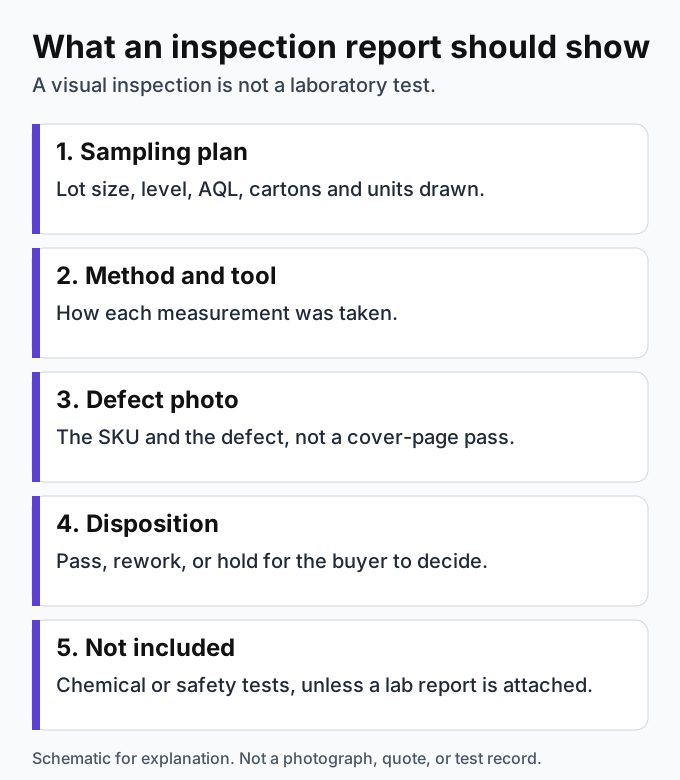
What a third-party pre-shipment inspection in China should deliver: sampling plan, measurements, function checks, defect photos, and a release call.
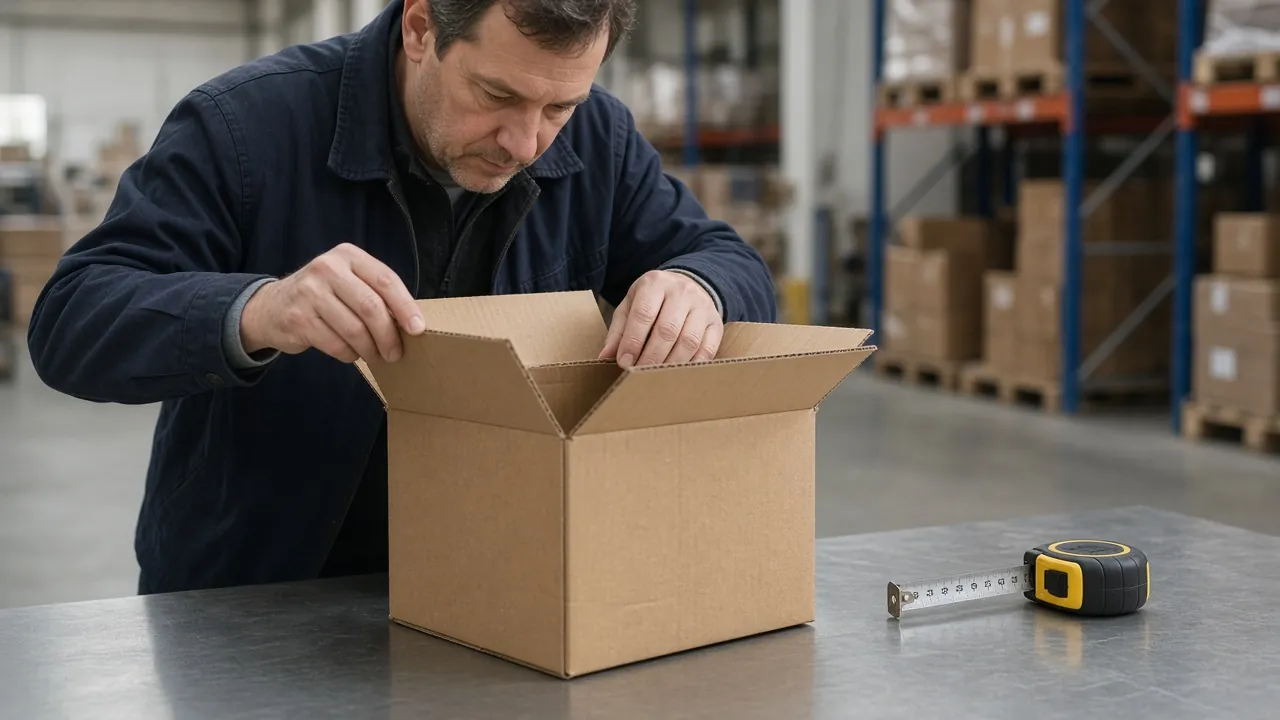
Inspection gives the buyer a chance to find a problem while the goods are still under factory control. The report is useful only when the inspector knows what to check and the buyer still has the authority to hold the shipment. Record item results on the quality control checklist. This page is the comparison of what the report should contain.
Scroll horizontally to see all columns →
| Report item | Inspector should show | Buyer checks | Not included |
|---|---|---|---|
| Sampling plan | Lot size, inspection level, AQL, cartons and units drawn | It matches the plan you agreed | A promise that every unit was opened |
| Method and instrument | Tool and method for each measurement | The same tool you named | An unstated lab method |
| Defect photo | SKU plus the defect | You can see both | A cover page that only says pass |
| Disposition | Pass, rework, or hold | You still make the decision | Authority for the inspector to ship |
| Laboratory test | Only if a lab report is attached | Standard, model, and lab name | A visual visit standing in for a chemical test |
Build the checklist from the order
The approved sample, purchase specification, packing requirements, and defect definitions should reach the inspector before the visit. A generic checklist can catch obvious damage, but it cannot decide whether a measurement, finish, label, or function is correct for this order.
Each SKU needs its own sampling decision. The lot size, inspection level, and AQL values determine the sample plan for inspection by attributes. Critical functions may need a defined test on every unit rather than a sample. The quality control inspection guide explains the difference between routine sampling and higher risk checks.
Make the report easy to audit
The inspector should identify the lot, cartons opened, units checked, equipment used, and result for each test. Defect photos need enough context to show the SKU and the problem. Carton labels, barcodes, accessories, and packing condition belong in the report because a correct product can still fail at receiving.
A pass does not mean that every unit was examined. It means the inspected sample met the agreed acceptance plan. The buyer should read the defect table and test notes rather than relying on the cover-page result.
Decide before the cargo moves
If the lot fails, keep the goods and remaining payment on hold while the factory responds. The next step may be sorting, rework, replacement, a documented concession, or rejection. The buyer makes that decision. A re-inspection should verify the corrected lot rather than accepting a few repair photos as proof.
The pre-shipment inspection guide includes a release checklist and timing advice. For orders that also need supplier search or production follow-up, see how sourcing works.
What a provider should deliver
- A sampling plan stated against the buyer's AQL and inspection level
- Measurement and function results against the approved specification
- Photos of cartons, labels, and each classified defect
- A pass, rework, or hold recommendation for the buyer to decide on
How the work usually runs
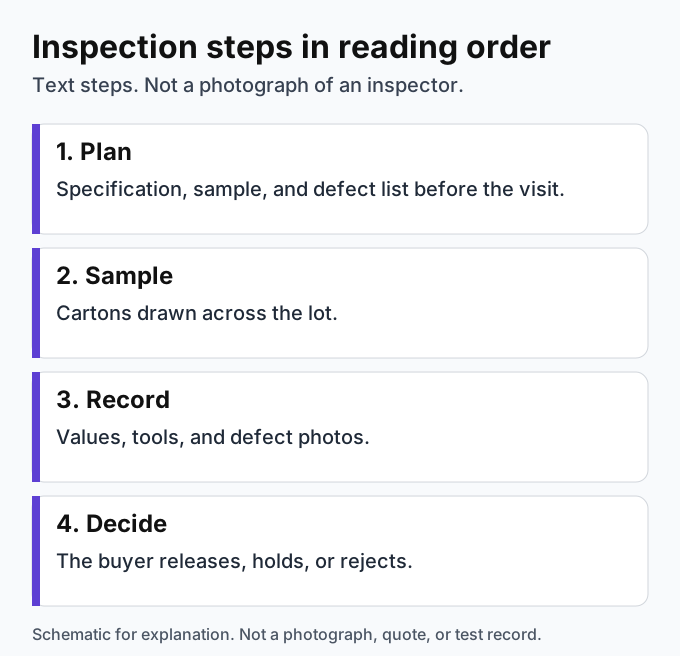
- Plan. The buyer, inspector, and factory agree the specification, sample, and defect list before the visit.
- Sample. Cartons are drawn across the lot, not from one convenient pallet.
- Record. Defects are classified and photographed.
- Decide. The buyer receives a written result before cargo books and makes the release decision.
Frequently asked questions
Can an inspection report replace laboratory testing?
No. A visual and functional inspection checks the sampled lot against the approved sample and specification. Safety, chemical, or performance claims need testing by a qualified laboratory to the standard that applies in the destination market.
How do I check the sampling and test methods in a report?
Compare the report with what you agreed: lot size, inspection level, AQL by defect class, number of units and cartons drawn, and the method and instrument used for each measurement. A report that omits these cannot show how the result was reached.