How Sourcing Works
Five steps from a product brief to a shipped carton: quotes, samples, production follow-up, inspection, and freight, with the decisions the buyer keeps.
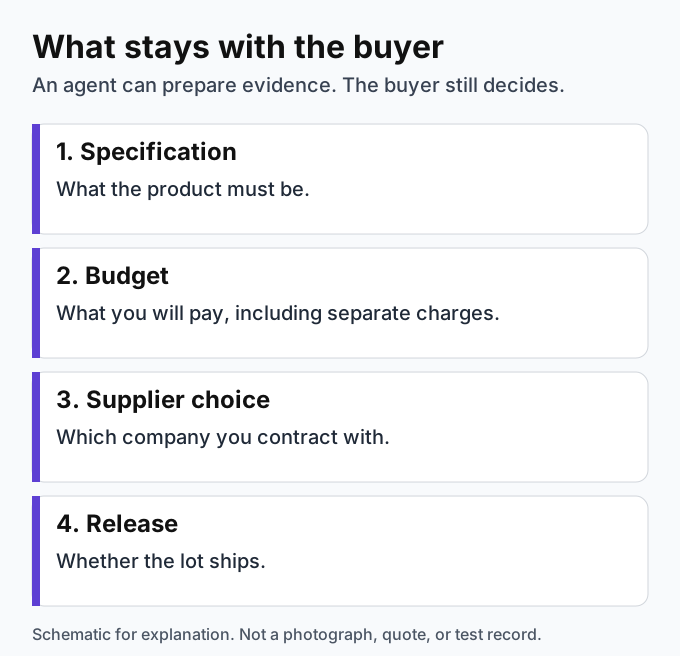
This page maps a China sourcing order from the buyer's side. Whether you work directly with factories or hire an agent, inspector, and forwarder, the buyer keeps control of the product specification, budget, supplier choice, and release decision.
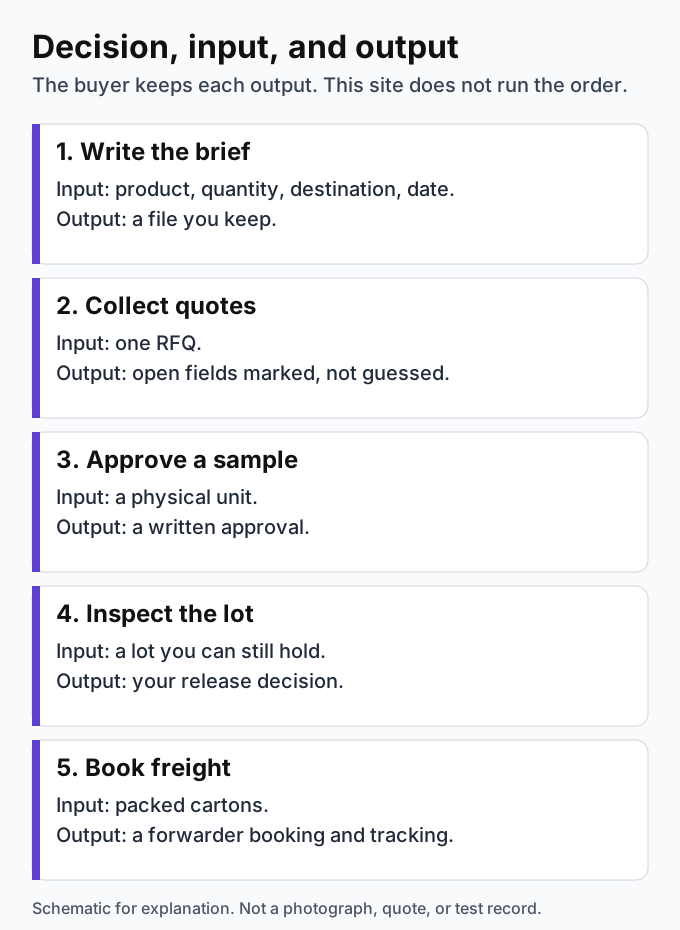
Decision, input, and output
Use this as the first screen. Each row is a decision, what you put in, and what you should have before the next step.
Scroll horizontally to see all columns →
| Decision | Input | Output before you continue |
|---|---|---|
| Brief | Product, quantity, destination, date | Written specification and target landed cost file |
| Quotes | One RFQ | Open fields marked, not filled in by guess |
| Sample | A physical unit | Written approval of that unit |
| Inspection | A lot you can still hold | Your release, rework, or reject decision |
| Freight | Packed cartons | A booking and the party who hands over tracking |
- Write the brief. Product, quantity, destination, required date, target price if you have one, and any 1688 or factory links. Keep it as your own record; it becomes the basis of every quote.
- Collect comparable quotes. Send the same RFQ to each supplier, or ask your agent to, and put the answers on one specification, Incoterm, and carton assumption. Mark missing fields as open.
- Approve samples. Accept or reject a physical sample before the bulk deposit moves, and write the approved details into the order file.
- Follow production and inspect. Arrange in-process checks and a pre-shipment inspection with your inspector while the lot and the balance payment can still be held.
- Consolidate and ship. Agree with your forwarder how cartons are received, documented, and booked by sea, air, or courier, and who hands over tracking.
What happens at each decision point
The first brief does not need to answer every technical question. It should identify the product, quantity, destination, required date, and any supplier already in view. List the missing questions before sending a controlled RFQ; the RFQ template shows the fields.
A shortlist is not an instruction to pay. Review the legal entity, quote assumptions, sample plan, and payment account first. The supplier scorecard provides a record for that comparison.
Sample approval closes the details that a drawing or photo could not settle. Record the approved measurements, material, finish, function, accessories, labels, and packaging. Production follow-up then checks the factory against that file rather than relying on chat history.
Inspection happens while the lot and remaining payment can still be held. The buyer reads the report and chooses to release, require correction, accept a written concession, or reject the lot. The pre-shipment inspection guide explains this stage in detail.
Fees and separate costs
If you hire a sourcing agent, agree the fee and its base in writing before any purchase is placed. Laboratory work, repeat inspection after a failed lot, extra storage, custom packing, and freight are often quoted separately. The sourcing agent fees guide explains how to compare fee models without mixing them up, and the sourcing agent vs trading company commission audit compares transparent buying commissions against hidden factory markups, tooling assists, and AQL 2.5 inspection holds across $10k, $50k, and $150k orders.
You do not have to buy every step from one provider; inspection and shipping can usually be hired separately. Read the service guides to see what each type of provider should deliver, and use the landed cost calculator to check the total before you commit.