China Sourcing for Dropshippers
How three China dropship setups differ: one-order shipping, China warehouse stock, and destination replenishment, including counts, returns, and cost.
Built for: Store owners who replenish without holding a full season of stock
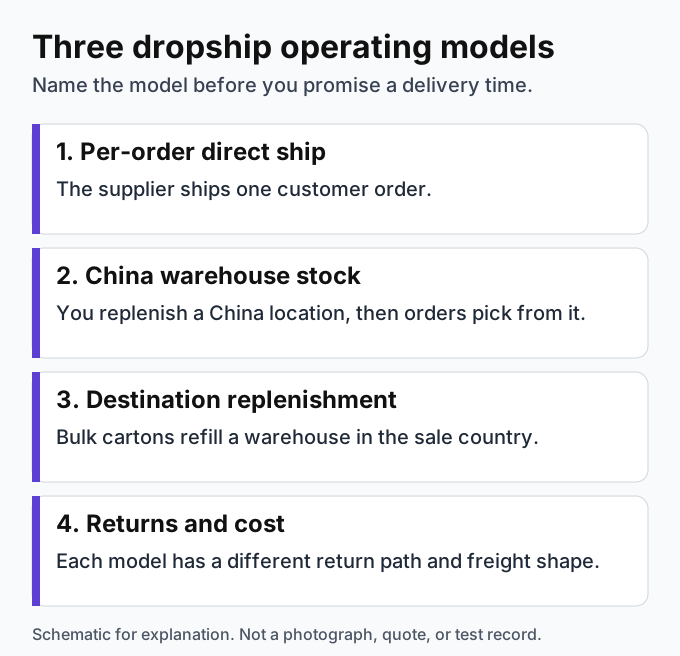
Dropshipping from China depends on inventory records that match the shelf. A platform quantity or supplier message is not enough if no one checks what is physically ready to ship. This page covers three setups: the supplier ships each customer order, stock sits in China and is picked there, or you refill a warehouse in the destination country.
Compare the three models
Scroll horizontally to see all columns →
| Per-order direct ship | China warehouse stock | Destination replenishment | |
|---|---|---|---|
| Inventory | Usually none on your side | Available, reserved, damaged, expected | Local available stock, plus a refill in transit |
| Dispatch | Starts when the supplier accepts the order | A pick from counted stock | A local pick, after the refill has landed |
| Returns | Often back to the supplier, which may be impractical | Agree a China or local address before launch | Usually a local return address |
| Cost shape | Parcel freight on every order | Handling and storage, then parcel or bulk freight | Bulk freight in, local pick out |
Do not describe the page, or your store, as factory-direct replenishment unless that is the model you actually run.
Confirm the operating model
Decide whether the supplier will ship individual orders, send replenishment stock to a China warehouse, or prepare bulk cartons for a destination warehouse. Each model has different handling, packaging, and delivery limits. The product, order frequency, destination, and expected dispatch time should be stated before a supplier is selected.
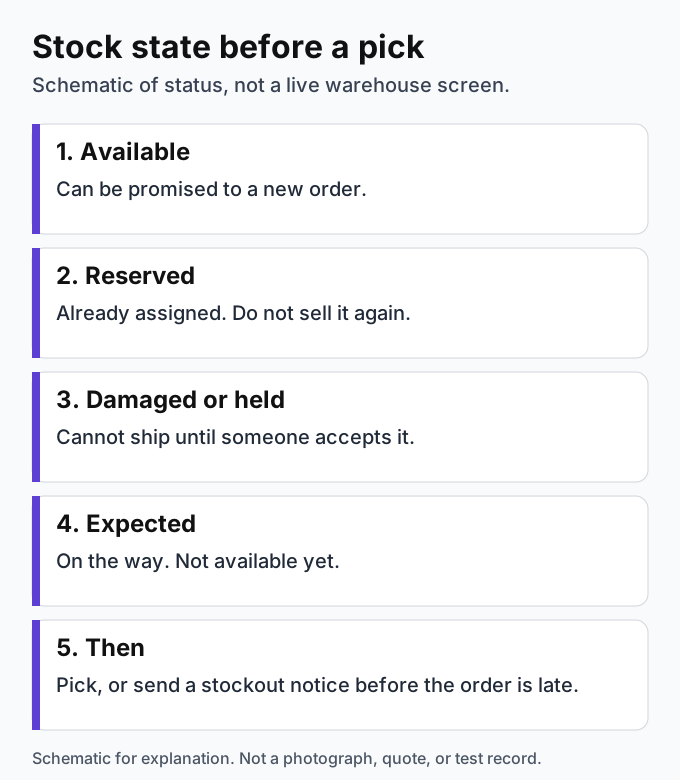
For several suppliers or mixed SKUs, a consolidation warehouse gives one place to receive and count goods; see the warehousing and consolidation guide. The inventory list should show available, reserved, damaged, and expected quantities rather than one combined number.
Keep product evidence with the SKU
Approve a sample and retain clear photographs of the sellable unit, packaging, accessories, and label. When new stock arrives, compare it with that reference. A variation in color, size, plug, or included parts should be resolved before customer orders are packed.
The warehouse can photograph defects or damaged cartons at intake. It cannot guarantee product quality from an online listing. Use a quality inspection with a defined sampling and test plan when a replenishment lot needs a release decision.
Set a delivery promise the route can meet
Dispatch speed and international transit are separate. State where stock is held, when the order leaves that location, and which carrier service applies. Do not offer a short global delivery promise for goods that still need production, consolidation, or sea freight.
Before choosing the route, compare the parcel charge or bulk freight with product cost, handling, duty, and destination fees. The landed cost calculator keeps those items visible. For bulk replenishment into a local warehouse, see shipping from China.
Common problems to check for
- Platform “stock” that is not in any warehouse
- No one to photograph a defect before a customer does
- Five suppliers and five shipping stories
Frequently asked questions
How do I keep stock counts in sync with the store?
Ask the warehouse to report available, reserved, damaged, and expected quantities separately, and update the store from the available count only. One combined number hides stock that cannot ship.
Who handles returns from customers?
Agree it before launch. Returning goods to China is often not practical, so decide whether returns go to a local address, are refunded without return, or are handled by a local fulfillment partner.
What happens when the store sells a unit that is not available?
Sell only from the available count. Reserved, damaged, and expected units are not available. If a pick fails, send a stockout notice before the order misses the promised ship time.
Which clock is the delivery promise on?
Separate the time to pick and hand the parcel to a carrier from the international transit time. A short promise does not fit goods that still need production, a China hold, or sea freight.