Building Materials Sourcing from China
Translate drawings, finishes, project quantities, packing, and local requirements into a building-material order suppliers can quote and inspectors can check.
Building materials are unforgiving because the mistake is often discovered after freight has been paid and installation has started. A panel that is slightly the wrong thickness, a tap body with the wrong connection, or a hardware set missing one fastener can hold up work far beyond the value of the item itself.
Quote from the project file, not a showroom photo
Send suppliers a controlled schedule with drawings, dimensions, material or grade, finish, color reference, tolerances, quantities by item, accessories, packing, destination, and required date. For doors, windows, sanitaryware, panels, or assembled systems, mark the interfaces that must match other work on the project.
Give every drawing and schedule a revision number. A supplier should quote against that revision and list exclusions. If the finish, accessory, or packing remains open, ask for a priced option rather than allowing the factory to choose silently.
The wholesale RFQ template can sit alongside the project schedule to capture Incoterm, production time, packing, document, and payment assumptions.
Make the supplier explain the production route
Ask whether the goods are made to order, pulled from stock, or collected across several production batches. Find out which steps happen at the quoted factory and which are subcontracted. Coating, tempering, plating, machining, printing, and final packing may occur at different sites.
That answer changes the inspection plan. If color is applied elsewhere, approving the main factory does not control the coating line. If several workshops produce one mixed order, each batch needs identification before loading. Supplier verification can check the contracting entity, address, production setup, and payment account before the deposit.
Approve a reference that shows acceptable variation
A sample board or showroom unit helps choose a finish, but it does not define the entire production range. Measure the sample, record its construction, and agree on acceptable color, texture, gloss, flatness, edge, and dimensional variation. Review the sample under lighting close to the installation environment when appearance matters.
For systems that join together, test the interface. Assemble representative panels, connect matching fittings, operate hinges or locks, and confirm that accessories fit the specified holes and threads. Keep the approved reference and signed drawing with the order file.
Inspect in a way that matches the project risk
Inspection may cover dimensions, thickness, flatness, finish, batch consistency, assembly, accessory counts, operation, labels, and packing. Large surfaces need checks across more than one point. Mixed items need a sample plan that covers the important product families, not only the easiest cartons to open.
Define any cycle, load, water, fit, or operation check before inspection. State the equipment, duration, sample size, and acceptance point. The quality control inspection guide explains how defect classes and sampling decisions work.
Physical inspection does not replace engineering or compliance review. Fire, slip, structural, electrical, and drinking-water requirements depend on the product and destination. Ask for the exact standard and a report tied to the ordered construction. Have a qualified project or local adviser review it when required.
Design the packing around loading and unloading
Heavy products can reach a weight limit before the container is full. Long panels may be limited by door clearance or unloading equipment. Fragile surfaces need separators, corner protection, crates, pallets, dunnage, or moisture control that add cost and volume.
Ask for a packing drawing and projected load plan before confirming the order. It should show pack dimensions, gross weight, pieces per pack, stack direction, protection, and unloading method. Once those details are stable, the landed cost calculator and shipping from China can use real weight and cube instead of a sales estimate.
Send the project schedule for review
Share the drawings, bill of quantities, materials, finishes, tolerances, destination, required documents, packing constraints, and site deadline. We can identify missing quote fields, compare suppliers, coordinate samples, and turn the chosen specification into an inspection file. Request a building-material sourcing quote.
Product types
- Decorative wall panels
- Roofing sheets
- Flooring and tiles
- Doors and windows
- Sanitaryware
- Architectural hardware
Typical wholesale buyers
- Importers
- Contractors
- Distributors
- Project buyers
Main sourcing markets
- Foshan ceramics and panels
- Wuxi and Hangzhou roofing
- Turkey for some sanitaryware
- Vietnam for select hardware
Information graphic
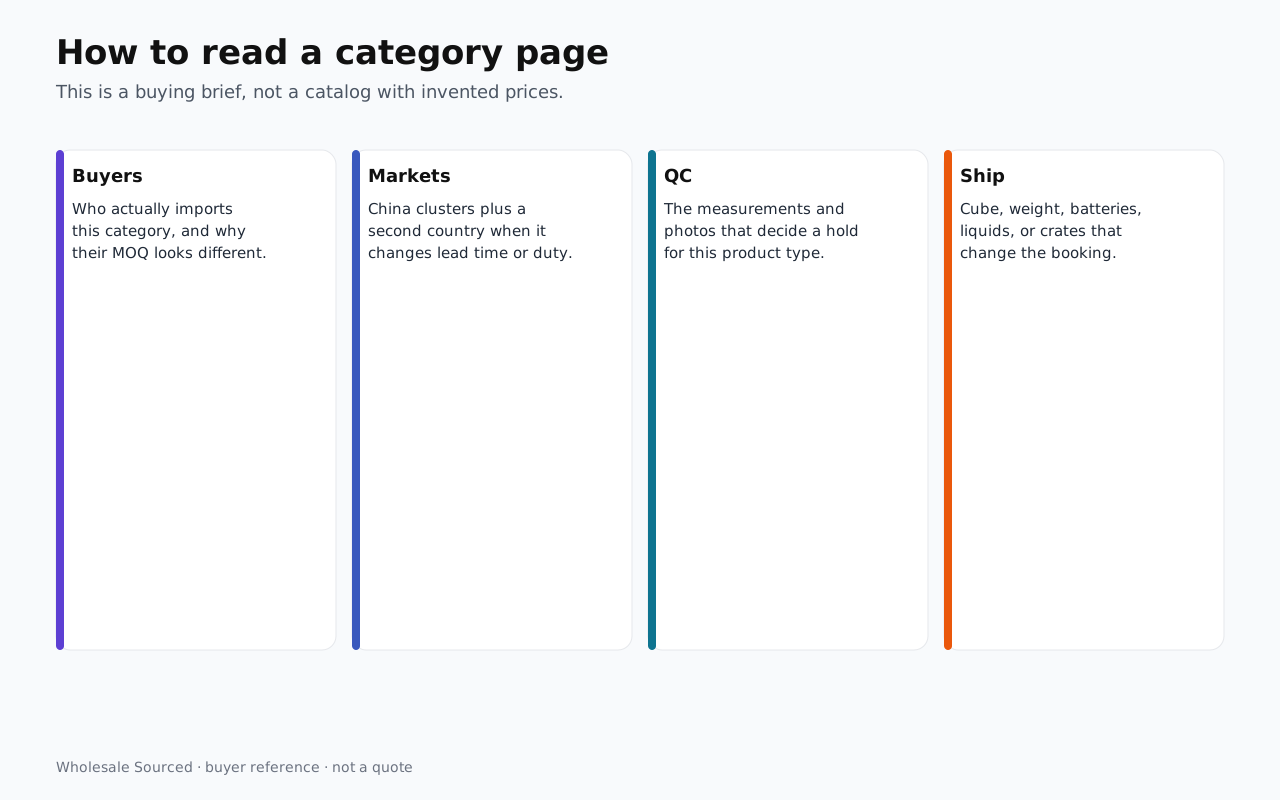
MOQ and pricing factors
Project MOQs are often container-based. Sample boards are not a color warranty under job-site light.
Quality control
- Dimensions, thickness, flatness, finish, and batch consistency
- Fit between panels, fixtures, fasteners, and project interfaces
- Defined operation or cycle checks for moving hardware
- Crates, pallets, edge protection, moisture control, and carton marks
Compliance and documents
Fire, slip, and drinking-water rules are local. Ask for the standard number, not a logo PNG.
Shipping considerations
- Weight dominates ocean cost
- Panels scratch if dunnage is lazy
- Tiles need moisture control
Frequently asked questions
What should I send for a building-material quotation?
Send drawings or schedules, dimensions, material or grade, finish, color reference, tolerances, quantities by item, accessories, packing, destination, and required date. Include the interfaces that must fit work supplied by other contractors.
Can several building products share one container?
Often they can, but the answer depends on weight distribution, dimensions, fragility, packing, supplier locations, loading sequence, and each factory’s minimum. Confirm the loading plan before treating a mixed-container price as final.
Does a factory test report prove the project is compliant?
Only if the report covers the ordered product, construction, standard, and intended use, and the destination accepts it. Project engineers, laboratories, or local compliance advisers may need to review the file before the order is placed.