Wholesale RFQ Template
A blank charge line fails the comparison. This wholesale RFQ template locks description, quantity, currency, charges, trade rule, parties, origin, and contents.
Updated
Copy the eight rows and rank a pair of replies only after they name the same Incoterms 2020 rule and mark each charge inside the price or beside it. Keep the sheet with the other buyer resources.
A wholesale RFQ template makes two factory replies comparable by locking eight facts: the description, the quantity and its unit, the currency of the purchase price, whether each named charge sits inside that price, one Incoterms 2020 rule, the seller and the buyer and the place of sale, the country of origin, and the contents of each package. The International Chamber of Commerce publishes eleven three-letter rules, and article A9/B9 of the chosen rule is the list of costs for that rule. Two replies that name two rules are two cost lists. 19 CFR 141.86 requires the commercial invoice to carry the description, the quantities, the purchase price in the currency of the purchase, the charges by name, the country of origin, and what each package contains. Rank the pair only after every required row is filled or marked excluded in writing.
Copy these eight rows
Copy the table into a spreadsheet. The supplier writes the answer. A blank cell stays open. Write any exclusion in the cell.
Scroll horizontally to see all columns →
| Row | Lock this | Dominant failure mode | Prevention |
|---|---|---|---|
| Description | Name, grade or quality, marks, composition, and intended use | Two unit figures for different goods | One description version on every reply |
| Quantity and unit | Quantity in the weights and measures of the shipping place, or of the United States | A count with no unit | Write the unit beside the quantity |
| Currency | Currency of the purchase price | A figure with no currency | Name the currency on the reply |
| Charges | Freight, insurance, commission, cases, containers, coverings, and packing: inside the price and identified, or itemized beside it | A unit figure that hides a different charge stack | Mark each charge in or out |
| Incoterms rule | One of the eleven three-letter rules, with costs read from that rule's article A9/B9 | Two rules ranked as one price | Hold the ranking while the rule count is above 1 |
| Parties and place | Person by whom and person to whom the goods are sold or agreed to be sold, and the place where | Payment to a different name than the seller on the reply | Match the payee to the seller before a deposit |
| Origin | Country of origin, and the manufacturer | Origin written only after the goods ship | Require origin on the reply |
| Package contents | What merchandise is in each package | A package count with no contents | State the contents of each package |
Use one Incoterms 2020 rule
Incoterms 2020 rules are a set of eleven three-letter trade terms for business-to-business sales of goods. They allocate buyer and seller responsibilities. All costs for a given rule appear at article A9/B9 of that rule, so the reply has to name the rule before those costs have a list.
Rule of thumb. If named rules sit above 1, do not rank the unit figures. Each rule keeps its own cost list in article A9/B9.
Free Carrier has a narrower document point. Article A6/B6 lets the parties agree that the buyer will instruct the carrier to issue an on-board bill of lading to the seller after the goods are loaded, and that the seller then tenders that document to the buyer. That agreement is for FCA goods sold for carriage by sea, when a party wants the on-board notation. The reply states yes or no. A blank answer leaves the document path open.
Mark each charge inside the price or beside it
19 CFR 141.86(a)(8) requires the invoice to itemize, by name and amount, freight, insurance, commission, cases, containers, coverings, and the cost of packing. It also requires charges incurred in bringing the merchandise from alongside the carrier at the port of exportation and placing it alongside the carrier at the first U.S. port of entry, when those charges are not already included. Packing, cases, containers, and inland freight to the port of exportation need not be itemized by amount if they are included in the invoice price and identified as included. If the invoice as first prepared omits the information, it has to appear on an attachment.

That named list is the hidden stack. A reply that folds packing into the unit figure and a reply that leaves packing out are different stacks, even when the unit figures look close. This page leaves the amounts blank. Carry each named charge into the landed-cost calculation once the reply says whether it sits inside the price. Leave the duty cell blank. CBP's importer tips say an importer can ask for a written ruling on classification and the rate of duty, and the importer of record stays responsible for the entry documents and the duties, taxes, and fees.
If a discount from a list or other base price applies, 19 CFR 141.86(g) requires the invoice to set out every such discount for each class of merchandise. Have each supplier state any applicable volume discount in writing on the quotation sheet.
Score the reply before you rank it
The eight rows are the required set. A row counts as answered only when it is filled on the same basis as the other replies, or excluded in writing.
Worked example. Required rows R = 8. One reply leaves Charges and Origin blank, so answered rows S = 6 and open rows O = R - S = 2. Comparable share C = S / R = 6 / 8 = 0.75. If open rows stay above 0, hold the ranking.
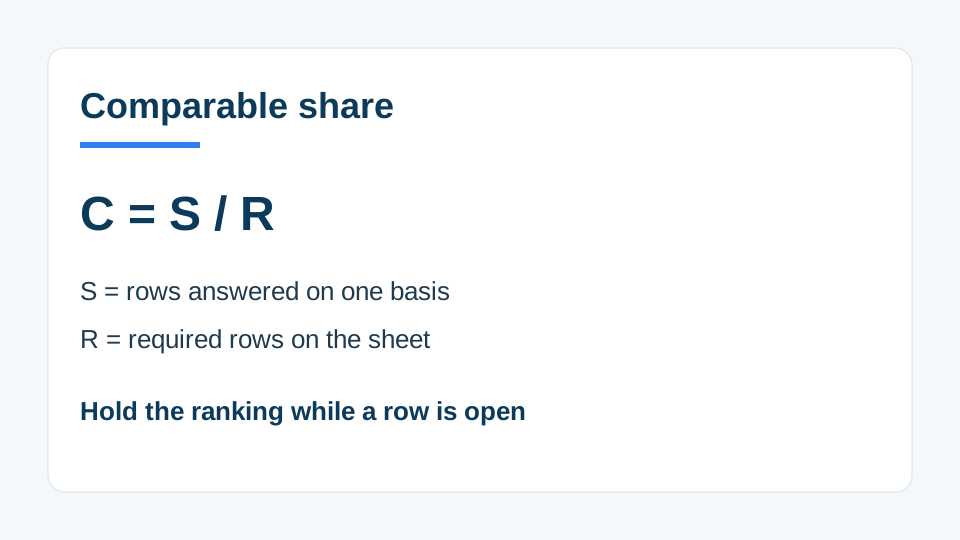
This fraction only counts filled rows on the sheet. When open rows hit zero, move the reply onto the supplier scorecard.
The eight rows rank a purchase or an agreement to purchase. A shipment that is not a purchase uses the value basis in 19 CFR 141.86(a)(6) instead of a purchase price. This sheet leaves that value for the invoice. The invoice also has to name the U.S. port of entry under 141.86(a)(1) and the time of sale under 141.86(a)(2). Leave those cells blank until you know them. Those two facts sit outside the eight ranking rows.
Name the parties, the origin, and the package contents
19 CFR 141.86(a)(2) requires the invoice to state the place where, and the person by whom and the person to whom, the merchandise is sold or agreed to be sold. 19 CFR 141.86(a)(3) requires a detailed description: the name of each item, the grade or quality, and the marks and numbers. CBP's importer tips add composition, intended use, the manufacturer, and pricing or payment information when you describe the merchandise for classification help. Write the product and the destination in the guide to sourcing products from China before a unit figure is ranked. Close the seller, the account name, and the payment identity in the supplier verification guide before a deposit.
19 CFR 141.86(a)(10) requires the country of origin. 19 CFR 141.86(e) requires the invoice to state, in adequate detail, what merchandise is contained in each individual package. The sheet asks for those contents.
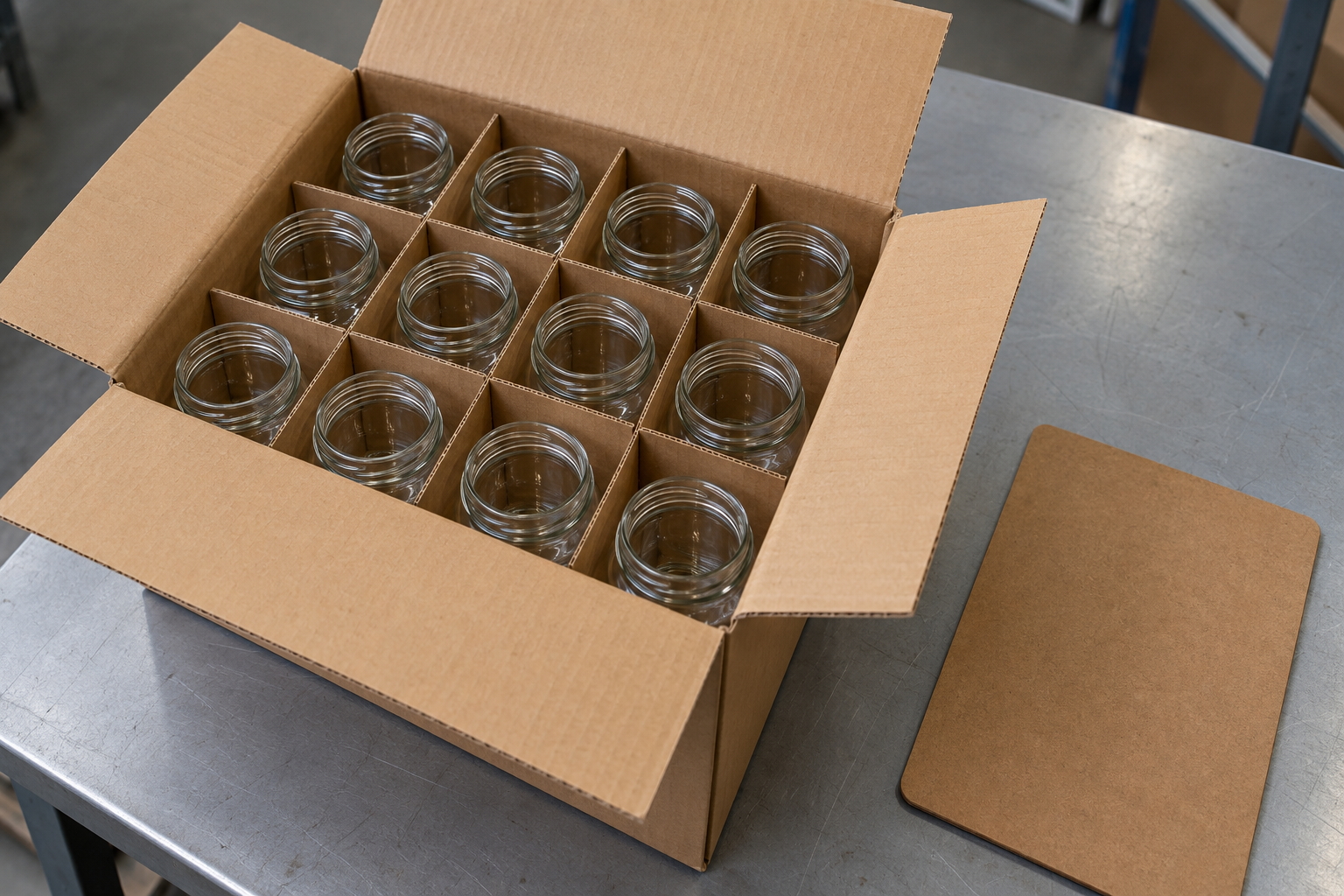
Record the packages you actually open on the quality-control checklist. 19 CFR 141.86(a)(11) also requires a list of goods or services furnished for production and not included in the invoice price, such as dies, molds, tools, and engineering work. Goods or services furnished in the United States are excluded. List those assists, or state that none were furnished. 19 CFR 141.86(d) requires the invoice and its attachments to be in English, or to carry an accurate English translation. Take the reply in English so the translation is not first created on the invoice.
Method and sources
Checked 18 October 2026. Facts on this page come from the ICC Incoterms 2020 page (eleven three-letter rules, costs listed in article A9/B9, and the FCA article A6/B6 on-board bill of lading), 19 CFR 141.86 as published on eCFR (invoice contents, charges, origin, package contents, assists, and English), and CBP's Tips for New Importers and Exporters (description points for classification help, and the importer of record's responsibility for the entry documents). No price, lead time, defect rate, or container dimension is stated, because those pages do not give one for this sheet.