Direct answer
A China sourcing agent represents the buyer on the ground: finding or paying suppliers, making quotes comparable, collecting samples, following production, inspecting goods, consolidating cartons, and coordinating export shipping. The buyer still approves the product specification, sample, budget, compliance plan, and final accept-or-reject decision.
Key takeaways
- Define the agent's scope, fee, supplier transparency, and payment path before any purchase is placed.
- Use the first order to test evidence quality, response time, custody records, and behavior when a lot fails.
- A good agent reduces coordination risk but does not replace the importer, laboratory, customs broker, or product owner.
A sourcing agent is useful when China-side work needs a named owner. Supplier platforms can introduce sellers, but they do not automatically compare specifications, receive samples from several factories, hold a failed lot, or reconcile cartons before export.
The agent’s value is operational evidence: who quoted, what was ordered, what arrived, what failed, what was corrected, and what was released.
Two common starting points
Some buyers already have a 1688 link, factory contact, or quotation. They need Chinese-language follow-up, domestic payment, receiving, inspection, and export coordination. Other buyers have only a product brief or reference sample and need the agent to build a shortlist.
These are different scopes. The first starts with execution; the second includes supplier search and comparison. The quote should say which work is included.
What the agent does at each stage
| Stage | Agent’s work | Buyer’s decision |
|---|---|---|
| Brief | Clarify missing specifications and destination facts | Approve intended use, requirements, quantity, and budget |
| Supplier search | Contact candidates, identify factory vs trader, collect comparable answers | Choose which suppliers advance |
| Samples | Order, receive, label, combine, photograph, and forward samples | Approve or reject the physical reference |
| Purchase | Confirm price, entity, payment schedule, production date, and written terms | Authorize the order and payment |
| Production | Follow material, schedule, artwork, packaging, and open deviations | Approve any change to the specification |
| Inspection | Check or commission checks against the approved reference | Accept, require rework, concede, or reject |
| Consolidation | Receive supplier deliveries, count SKUs, relabel, and prepare one outbound file | Approve the final packing and release |
| Shipping | Compare modes, coordinate documents and booking, provide handoff details | Confirm Incoterm, importer, customs plan, and destination delivery |
The agent should not make silent substitutions to avoid a delay. A changed component, factory, color, packaging method, or test report returns to the buyer for approval.
What the agent does not replace
The buyer remains the product owner. That includes defining acceptable performance, approving the sample, deciding which destination rules apply, and determining whether a defect is commercially acceptable.
A sourcing desk can collect supplier documents, but it is not automatically the importer of record, customs broker, accredited laboratory, or destination-market legal adviser. Assign those responsibilities by name instead of hiding them inside a promise of door-to-door service.
Fee models to compare
Three models are common:
Commission on goods value
The agent charges a stated percentage of the purchase value. Wholesale Sourced states a typical range of 5% to 10%, depending on order size and coordination. Confirm whether that includes supplier search, one inspection, domestic receiving, consolidation, and export documents.
Fixed project or service fee
Useful when the work is inspection-only, a factory visit, a limited shortlist, or a defined sample project. Repeat inspections and unusual travel are usually separate.
Resale or embedded markup
The service buys and resells the goods at a quoted price. This can simplify the transaction, but the buyer should know that supplier cost and margin are not being presented as an open-book commission.
No model is automatically wrong. Hidden switching between models is the problem. Ask whether the original factory quotation and invoice will be visible before placing the order.
Control the money and the goods
Write down:
- Which legal entity contracts with the buyer
- Which entity receives the buyer’s money
- Whether the agent pays the supplier as agent or reseller
- Who holds title or custody at each stage
- Whether supplier refunds return through the same path
- Who can release goods after inspection
The order file should reconcile the buyer payment, supplier payment, goods receipt, warehouse count, and outbound shipment. An unexplained beneficiary change requires fresh verification.
How to test an agent on a first order
Start with a scope that reveals operating behavior without exposing the largest possible order. One SKU or one existing supplier is enough to test:
- Does the agent identify missing specification fields?
- Are supplier identity and quotations visible under the promised model?
- Are samples and cartons labeled so the evidence can be traced?
- Does the report show measurements and defects rather than only attractive photos?
- Does the agent hold a failed lot without pressure to release it?
- Are fees, storage, re-inspection, packaging, and freight separated clearly?
The best signal is not a problem-free first order. It is how the agent documents and resolves an ordinary problem.
Warning signs
Pause if the agent refuses to state the fee model, hides the Chinese counterparty after promising transparency, sends payment instructions from an unrelated personal account, guarantees compliance without reviewing the destination, or releases goods before the buyer receives the agreed inspection evidence.
Be cautious with a guaranteed lowest factory price. A comparable quote needs the same material, packaging, quantity, lead time, Incoterm, and payment risk. Without those fields, the promise cannot be tested.
A practical handoff
Send the product, quantity, destination, required date, and any supplier links. The first response should identify open questions and propose a limited next step, usually an RFQ, supplier check, or sample. It should not demand a bulk deposit.
See the complete product sourcing workflow, supplier verification checklist, or ask for a scoped quote through the product sourcing service.
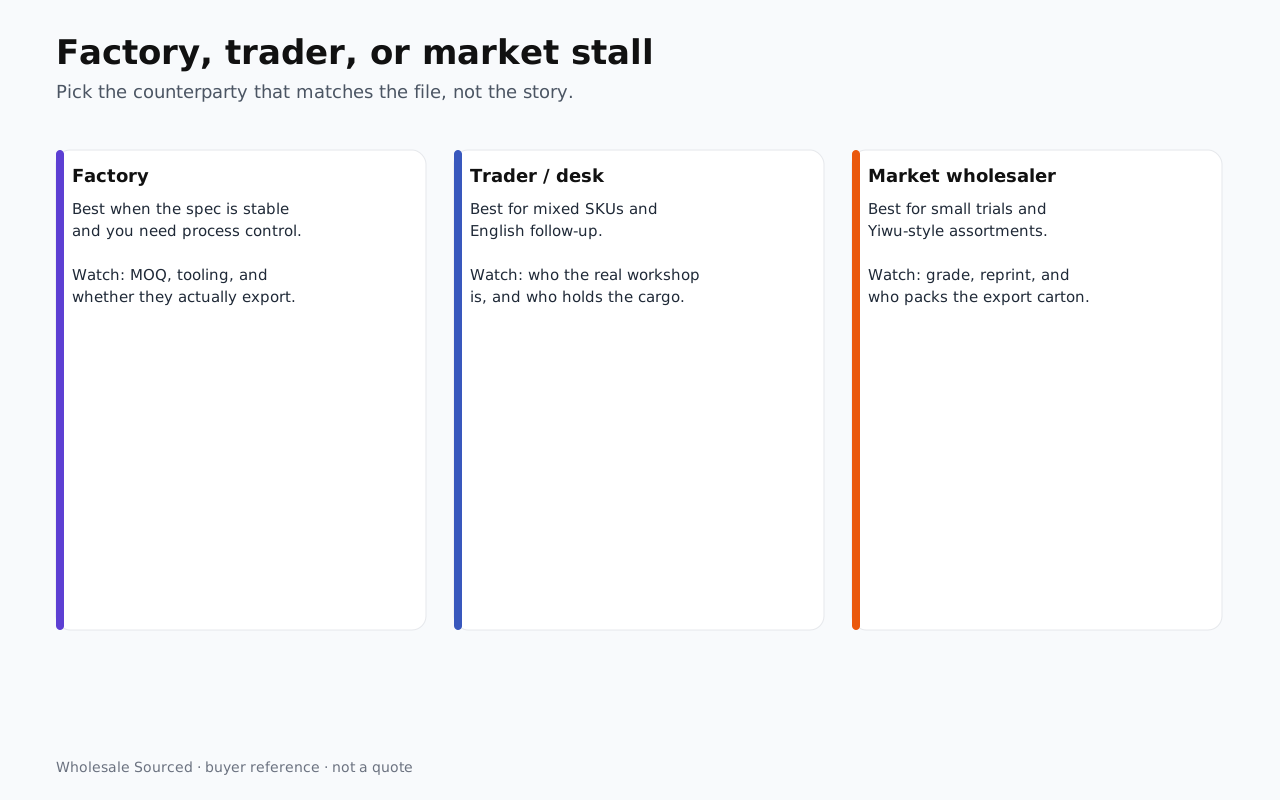
Information graphic
Frequently asked questions
Is going factory-direct always cheaper than using a sourcing agent?
The factory unit price may be lower, but the buyer still pays for communication, supplier checks, samples, local receiving, inspection, consolidation, and the consequences of a failed lot. Compare the agent's disclosed fee with the full cost of owning those tasks yourself.
Can I keep my own supplier and use an agent only for payment or inspection?
Yes. A limited scope can cover domestic payment, receiving, inspection, consolidation, or shipping while the buyer keeps the supplier relationship. The service agreement should say who communicates purchase changes and who can authorize release.
Should a sourcing agent reveal the factory?
The commercial model should be disclosed before work begins. If the service promises transparent sourcing, the quote, factory identity, and payment trail should be visible. If the agent resells goods as principal, that markup model should be stated instead of presented as an open commission.
Sources
- Incoterms 2020: International Chamber of Commerce Accessed August 23, 2026.