Commercial Equipment Sourcing from China
Build a quote-ready equipment set with the right configuration, accessories, spares, documents, factory checks, and export packing.
A commercial buyer does not need a machine that looks right in a brochure. The buyer needs a complete set that fits the site, powers on with the local supply, connects to the rest of the system, arrives with the right accessories, and can be supported after installation.
Define the job before choosing the model
Start with the operating environment and required outcome. Record duty, capacity, dimensions, materials, utilities, voltage, frequency, plug, communication method, interfaces, installation clearances, environmental limits, and destination. For connected equipment, identify firmware, app, protocol, account, or network requirements.
Then build the set around the main unit. Include modules, cables, connectors, mounts, fasteners, tools, consumables, manuals, startup spares, wear parts, retail or export packing, and any site-specific accessory. If an installer will need it on day one, it belongs in the quotation.
Use the wholesale RFQ template with a bill of materials so each supplier prices the same configuration. Product sourcing can compare the resulting offers and identify missing parts before a lower price wins by omission.
Separate the standard model from the project changes
Ask the supplier to mark every departure from its standard product. A voltage change, stainless grade, connector, language pack, firmware setting, logo, cabinet dimension, or mounting detail may move the order into a custom production route. The quotation should identify engineering fees, tooling, sample timing, minimums, and what happens if the customized unit fails approval.
Before paying a deposit, verify the supplier and confirm what it manufactures, assembles, programs, or resells. Equipment companies often use several sites or outside workshops. The buyer needs to know which location will build and test this order.
Turn the demonstration into an acceptance plan
A sales demonstration is useful only if it becomes a record. Note the model and configuration, setup, input, operating sequence, output, controls, alarms, accessories, firmware, and visible finish. If the supplier promises a performance point, define how it will be measured and who is qualified to judge it.
An inspection plan can then cover:
- Model, serial information, ratings labels, and configuration
- Quantity and condition of every item in the bill of materials
- Basic operation using the approved input and procedure
- Controls, indicators, alarms, safety guards, and selected interfaces
- Manuals, cables, mounts, tools, spares, and consumables
- Crate, pallet, handling marks, moisture protection, and packed size
A burn-in, load test, calibration, or specialist commissioning needs a written method, suitable equipment, duration, and acceptance point. Quality inspection can work from a buyer-approved plan, but it does not replace an engineer or laboratory where specialist judgment is required.
Plan for the first maintenance call
Choose startup spares, wear parts, and consumables before the equipment ships. Ask for part numbers, drawings or photos, quantities, shelf-life information where relevant, and instructions for replacement. Pack the parts so they can be identified on arrival, not hidden somewhere inside the main crate.
Also agree on how technical questions, firmware files, and replacement parts will be handled after shipment. A written contact and part-number list is more useful than a broad promise of “lifetime support.”
Quote the export pack and delivery conditions
Record crate construction, pallet dimensions, center of gravity or lifting points where relevant, gross weight, stack limits, moisture protection, and unloading needs. Batteries, oils, refrigerants, magnets, or other contents may affect carrier acceptance. Give the forwarder a complete goods description.
Once the final packed dimensions and weights are available, shipping from China can compare the route and handling requirements. If several suppliers contribute to one installation, warehousing and consolidation can receive and reconcile the sets before export.
Send the equipment requirement
Share the use case, site conditions, technical requirement, bill of materials, quantity, destination, required documents, and target installation date. We can help turn that information into comparable supplier quotes, an approved sample or demonstration record, and a release checklist. Request a commercial equipment sourcing quote.
Product types
- Commercial audio
- Security and access
- Commercial kitchen
- POS hardware
- Warehouse equipment
- Rugged handhelds
Typical wholesale buyers
- Integrators
- Facility buyers
- Dealers
Main sourcing markets
- Pearl River Delta electronics
- Ningbo and Shanghai kitchen equipment
- Shenzhen rugged devices
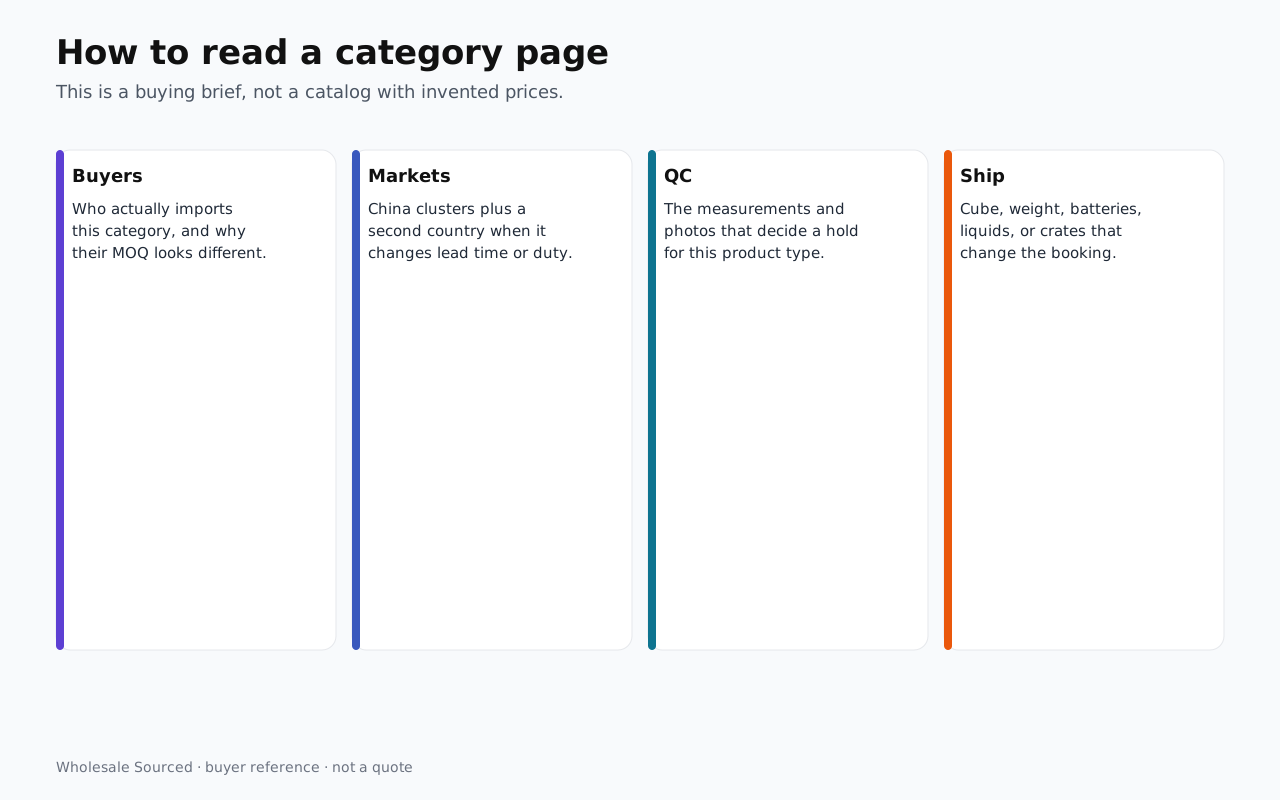
Information graphic
MOQ and pricing factors
Many SKUs are quoted per set or per project. Spare-parts lists matter more than a pretty brochure.
Quality control
- Model, ratings label, serial details, firmware, and configuration
- Basic operation against a buyer-approved test procedure
- Cables, mounts, tools, manuals, spares, and accessory completeness
- Crate protection, handling marks, and packed dimensions
Compliance and documents
Electrical safety and radio rules are local. Project specs beat marketplace titles.

Shipping considerations
- Crates and lift-gate needs
- Batteries and oils
- Spare parts should travel with the set
Frequently asked questions
What is the best way to compare commercial equipment quotes?
Use one bill of materials that lists the main unit, model, configuration, interfaces, accessories, spares, manuals, packing, destination, and required documents. Compare exclusions and warranty handling as well as the unit price.
Can an inspector commission industrial equipment at the factory?
A general inspection can verify identity, completeness, visible condition, labels, packing, and defined basic functions. Specialist commissioning, calibrated performance tests, or destination approval may require a qualified engineer or laboratory.
When should spare parts be ordered?
Choose startup spares and likely wear parts while approving the equipment. Put part numbers, quantities, and storage positions in the packing list so the receiver can reconcile them before installation.