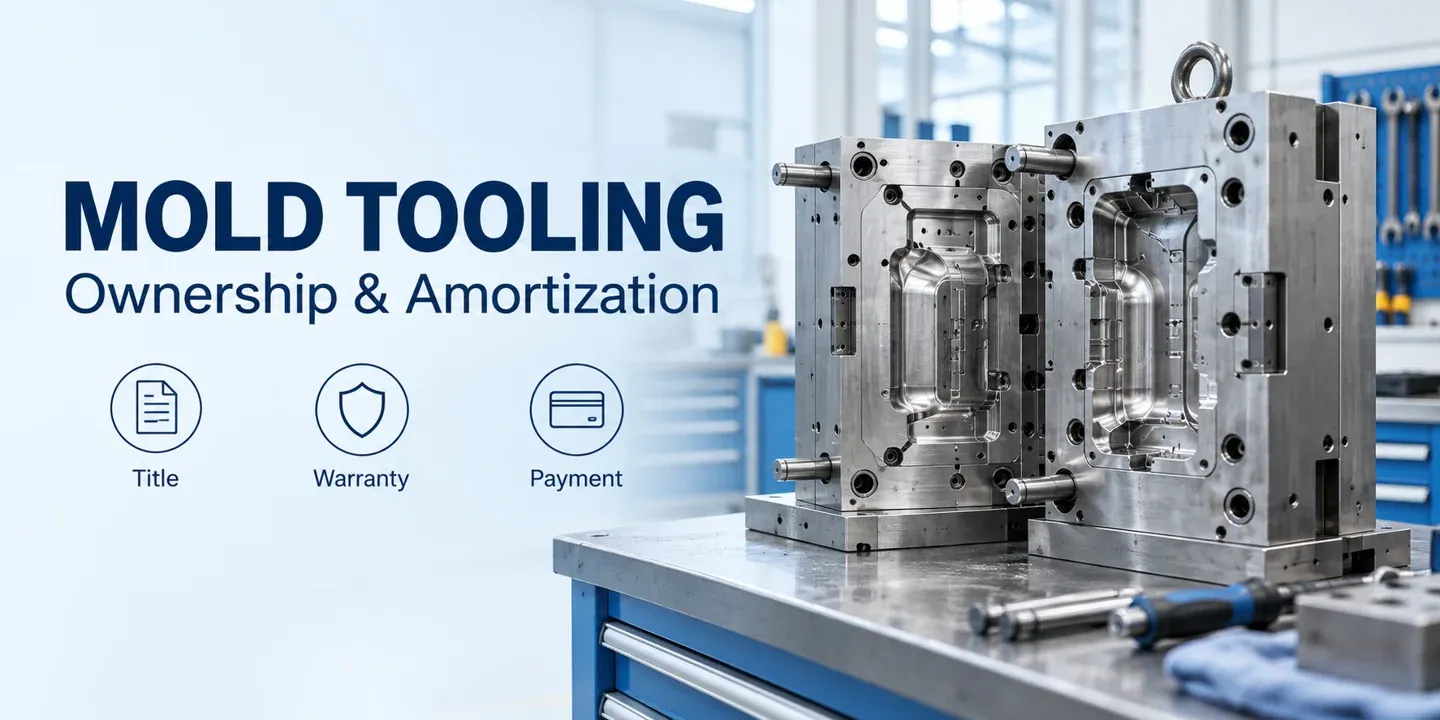
For mold tooling ownership in China, put the title-transfer event, steel specification, shot-life warranty, amortization terms and return instructions into the agreement before authorizing the build. Use the schedules below to prepare the tooling purchase order and its attachments.
Start with these decisions: who will own the tool, where will it stay, what will acceptance require, and when will the tooling charge stop? Keep your answers beside the mold identification record. For the wider purchasing workflow, browse our China sourcing guides.
Define the ownership event and the right to collect
Write the title event and release terms explicitly. Compare these published contract examples when choosing your wording:
Under Methode’s China tooling terms, title transfers when tooling is delivered to the buyer’s premises or another buyer-designated place.
Under Three R Plastics’ terms, mold ownership transfers upon receipt of full tooling payment.
Under Methode’s China tooling terms, Buyer’s Property, including tooling, is withdrawable at the buyer’s direction on reasonable notice and payment of freight.
Those Methode terms provide that no pulling charges will be considered when the buyer exercises its repossession right.
For your agreement, complete an asset record with the contracting parties, mold identifier, identifying photographs, included inserts and spares, custodian, storage address, title event and release instructions. Ask each party to agree to the completed record.
Address retention alongside payment
Under the Chinese Civil Code’s contract-for-work provisions, if the client fails to pay remuneration or material fees, the contractor may retain the completed work or refuse delivery, unless otherwise agreed.
Under the Chinese Civil Code, movable property that law or the parties’ agreement prohibits retaining may not be retained.
Under Methode’s China tooling terms, when permitted by law, the seller waives liens and other rights in Buyer’s Property, including setoff, recoupment and counterclaims from this or other transactions.
Record the agreed treatment of retention and payment disputes separately. Specify the release request, freight responsibility and handover documents; keep the payment-resolution process beside them.
Specify the steel and the acceptance evidence
Start the material schedule with the named producer and grade for each tool component. Separate the delivery-condition field from the finished-tool acceptance field.
Under the Chinese Civil Code, a contract for work generally includes acceptance standards and methods.
Under its contract-for-work provisions, contractor-supplied materials must be selected as agreed and be subject to client inspection.
Compare the named steel specifications
Uddeholm Impax Supreme’s standard specification is AISI P20 modified.
Uddeholm Impax Supreme’s delivery condition is hardened and tempered to 290–330 HB.
Uddeholm Orvar Supreme’s standard specification is Superior AISI H13 per NADCA#207 Grade B.
Uddeholm Orvar Supreme’s delivery condition is soft annealed to approx. 180 HB.
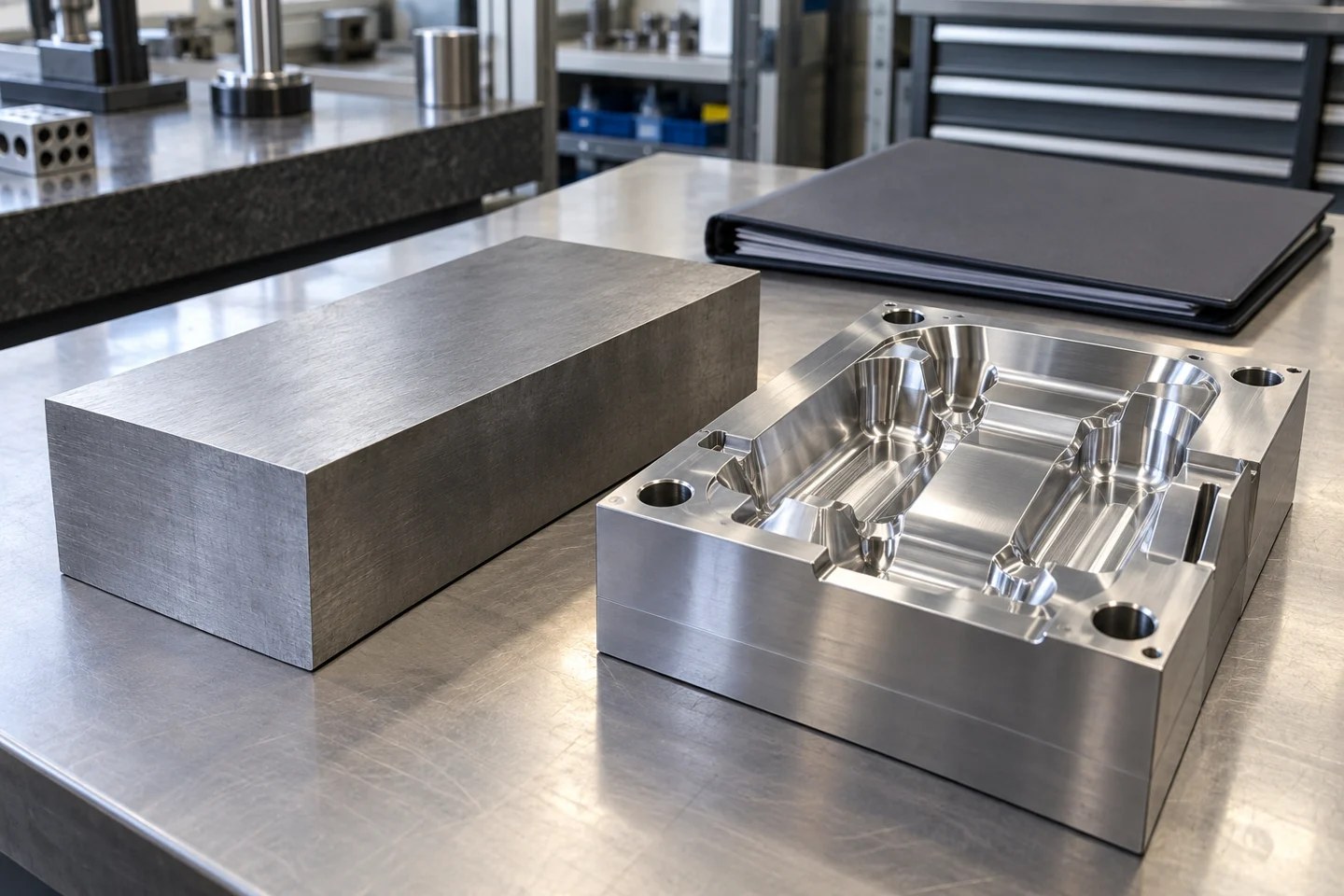
For your injection mold steel comparison, carry the complete named specification into the purchase-order attachment. Ask for the proposed finished condition, inspection method and acceptance record in separate fields. Keep the warranty commitment in its own schedule.
Under the Chinese Civil Code’s contract-for-work provisions, on completing the work, the contractor must deliver it with necessary technical information and relevant quality certificates.
For nonconforming work, the client may reasonably choose remedies including repair, reworking, reduced remuneration or compensation.
Complete the acceptance attachment with the agreed material, finished-tool requirements, sample approval criteria, inspection evidence and response to nonconformity. Leave no acceptance field at “to be agreed” when you authorize the build.
Write the shot-life warranty with its conditions
Request a complete warranty schedule. Enter the agreed shot-life commitment beside the counting method, covered resin, operating conditions, maintenance duties, remedies and exclusions.
Under Methode’s China tooling terms, the warranty period begins when tooling is delivered or first put in service.
For an example of how a mold maker scopes its own warranty, consider the following Three R Plastics provisions:
Three R Plastics’ warranties are subject to the exact project requirements and specifications.
Its warranty applies only to molds built and run at Three R Plastics.
Its warranty becomes invalid if anyone other than Three R Plastics performs work on the mold.
Use these questions to complete your warranty attachment:
- What starts the warranty, and how will that event be recorded?
- What counts as a shot, and which counter or production record will be accepted?
- Which resin and processing conditions will the warranty cover?
- Who will perform maintenance, and what records will accompany the mold?
- What repair or replacement response will apply to an accepted warranty claim?
- What will happen to the warranty after relocation or outside repair?
Put per-unit amortization into the purchase order
Complete the cost-recovery schedule and the ownership schedule side by side. Ask for an explicit title event even when the quote includes a tooling charge in the part price.
Under Mercedes-Benz’s Master Terms for direct purchasing, title to Amortized Supplier Equipment does not pass until the defined title-transfer date.
Use the following blank schedule for your OEM tooling amortization purchase order. Fill each field with the negotiated term and cross-reference the ownership attachment.
Scroll horizontally to see all columns →
| Purchase-order field | Term to agree |
|---|---|
| Tool and covered cost | Identify the mold, included components and recoverable tooling amount. |
| Per-unit charge | State the tooling charge separately from the part price. |
| Eligible quantity | Choose ordered, accepted or delivered quantity; address rejects and replacements. |
| Recovery record | Agree the invoice reference, cumulative quantity and remaining balance record. |
| Stop event | Define the recovery cap and the event that removes the tooling charge. |
| Refund or credit | Specify the trigger, timing and settlement method if a refund is agreed. |
| Early exit | Agree the balance treatment if production stops before the planned quantity. |
| Title and release | State the ownership event and refer to the mold-return schedule. |
Compare a volume-refund arrangement
Under HC-Mold’s Model C arrangement, the tooling refund is triggered by cumulative delivered quantity reaching the contracted quantity.
Under that Model C arrangement, failure to reach the contracted quantity loses the refund but does not change buyer ownership.
Ask the supplier to describe your proposed arrangement in full: upfront payment, cost recovery through part purchases, any volume refund, and the title event.
Coordinate the NNN agreement and mold ownership clause
When preparing an NNN agreement mold-ownership clause for China, cross-reference the identified tooling, permitted production use, confidentiality obligations and return schedule. Review those fields alongside the tooling purchase order.
Under the Chinese Civil Code’s contract-for-work provisions, the contractor must keep secrets as required by the client and may not retain copies or technical materials without permission.
Under Methode’s China tooling terms, Buyer’s Property may be used only for goods or materials ordered by the buyer.
Under those Methode terms, the seller must bind its subcontractors through consistent contractual terms to the Buyer’s Property provisions.
Name the parties handling the tooling and files. Ask for the permitted uses and subcontractor obligations to be agreed in the same document set as the ownership record.
Complete the return and production-cessation schedule
Prepare the handover instructions before production starts. Specify the request recipient, agreed deadline, packing, freight, documents and condition record.
Under Methode’s China tooling terms, while Buyer’s Property is in the seller’s possession, buyer’s written consent is required to remove it from the seller’s premises.
Under those Methode terms, Buyer’s Property must be insured with reputable insurers for full replacement value against loss or damage.
Under the Chinese Civil Code’s contract-for-work provisions, the client may terminate before completion but must compensate the contractor for resulting losses.
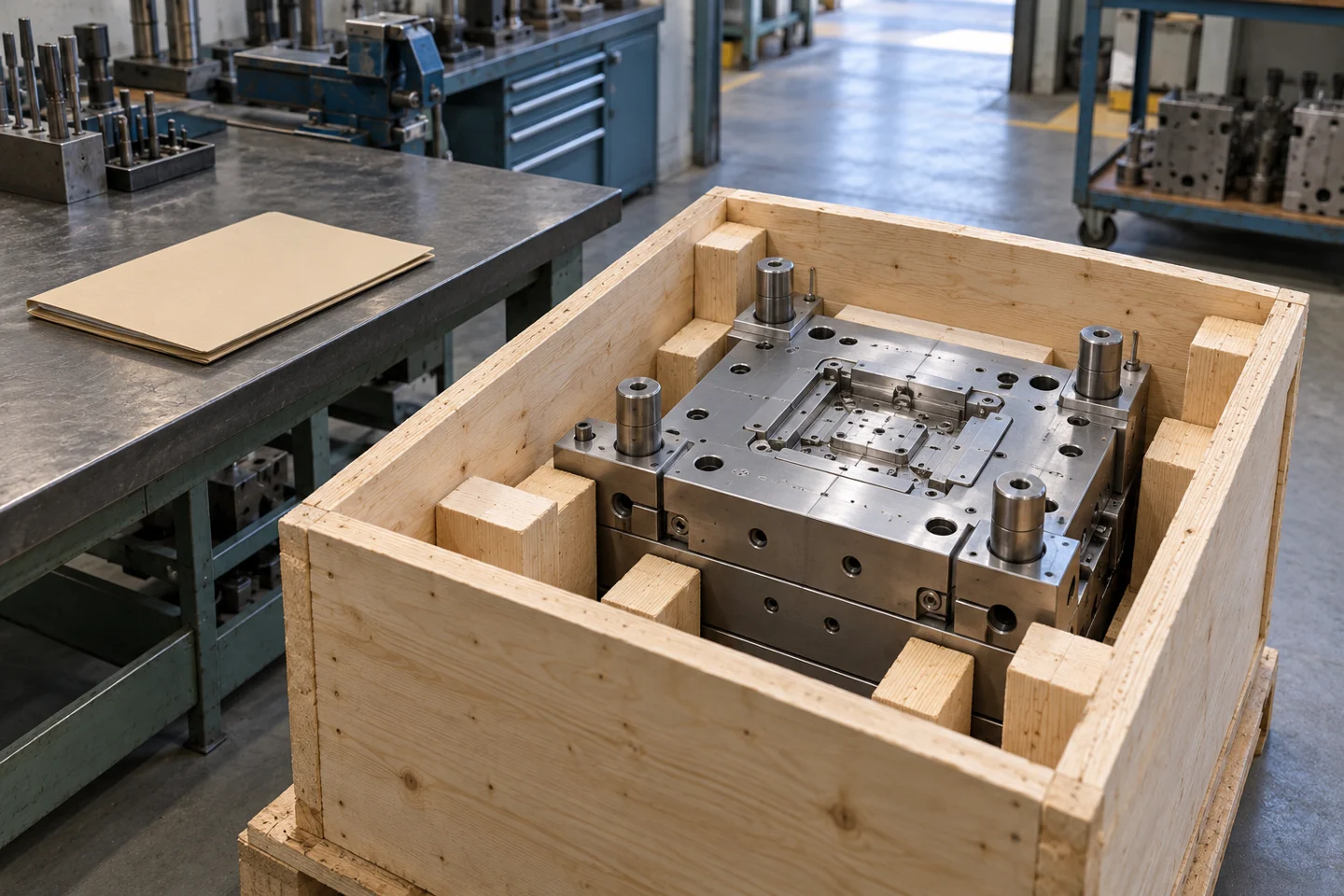
Close your purchase-order review by completing the asset record, material and acceptance attachment, warranty schedule, amortization schedule and return instructions. Attach the agreed versions to the order. Return to the sourcing guides for the next purchasing decision.
Sources
-
Chinese Civil Code — contract-for-work and retention provisions
-
Methode — Tooling purchase terms for China
-
Three R Plastics — Terms and Conditions
-
Uddeholm — Impax Supreme brochure
-
Uddeholm — Orvar Supreme brochure
-
Mercedes-Benz — Master Terms for direct purchasing
-
HC-Mold — Tooling ownership models
Information graphic