Source Home and Kitchen Products from China
Define materials, function, sets, samples, inspection, retail packing, and landed cost for kitchenware and household products sourced from China.
A catalog can show six nearly identical pans, bottles, organizers, or appliances without explaining why their prices differ. The answer is usually inside the material, thickness, coating, capacity, components, finish, or pack. Those details need to move from the supplier’s head into the buying file.
Write the specification around use
Start with what the customer will do with the product. Then record dimensions, capacity, weight, material and grade where relevant, wall thickness or construction, coating, finish, color, handle, lid, seal, moving parts, included accessories, retail pack, destination, and required documents.
For a set, list every piece and quantity. For an appliance, add voltage, frequency, plug, power, controls, cord length, functions, ratings label, and accessories. If the item must fit a shelf, cabinet, dishwasher, replacement part, or existing retail box, include the interface dimensions.
Use the wholesale RFQ template so suppliers answer the same material, packing, price, Incoterm, production, and document questions.
Ask what creates the MOQ
The blank product, custom color, coating, logo, label, printed box, or insert may each have a different minimum. Ask the supplier to identify the limiting process and the quantity of excess components. This often reveals practical trial-order options, such as using a standard finish with custom packaging before committing to a custom coating run.
Product sourcing can compare factories using the same specification and show whether a lower quote changed material, thickness, pack, accessories, or quality assumptions.
Approve the complete product and pack
Measure the sample and use it as intended. Check balance, capacity, lid fit, handles, moving parts, seal, coating, decoration, assembly, controls, accessories, and cleaning or care instructions where relevant. Keep the approved unit, material and color references, artwork, and retail packing together.
For a set, open and repack it. Confirm every component, insert, label, barcode, protective piece, and printed instruction. The final retail unit may expose fit and protection problems that individual samples hide.
Before the deposit, verify the supplier and confirm whether forming, coating, decoration, assembly, or packing occurs at another location.
Turn vague quality requests into repeatable checks
An instruction such as “check the coating” leaves too much room for interpretation. State the surface, method, sample quantity, and failure condition. The same applies to leak behavior, capacity, lid retention, handle strength, appliance operation, noise, heat, and package fit.
A bulk inspection can cover identity, dimensions, weight, visible finish, selected functions, accessories, set completeness, labels, retail packing, and master cartons. The quality control inspection guide explains how sampling works, while the quality control checklist helps organize the checks and required photos.
Food-contact and electrical requirements depend on the product and destination. Ask for reports that match the ordered material, construction, and model. A document for a related item does not confirm the current SKU.
Let the final carton drive landed cost
Glass and stoneware need protection that adds weight and volume. Assembled products and gift sets can leave expensive empty space if carton design begins too late. Appliances may require stronger retail and export packs. Confirm pieces per carton, dimensions, gross weight, dividers, void fill, stack direction, and damage limits on a finished pack.
Use those measurements in the landed cost calculator, then ask shipping from China to compare routes. A unit-price saving can disappear if the pack adds too much cube or damage risk.
Send the product brief
Share the product reference, intended use, material, dimensions, quantity, branding, retail pack, destination, required documents, and target date. We can help close the specification gaps, compare suitable suppliers, and prepare the sample and inspection path. Request a home and kitchen sourcing quote.
Product types
- Kitchenware
- Drinkware
- Storage
- Small appliances
- Bathroom accessories
- Home décor
Typical wholesale buyers
- Houseware retailers
- E-commerce brands
- Hospitality buyers
Main sourcing markets
- Yangjiang cutlery
- Chaozhou ceramics
- Yongkang housewares
- Vietnam for some drinkware
Information graphic
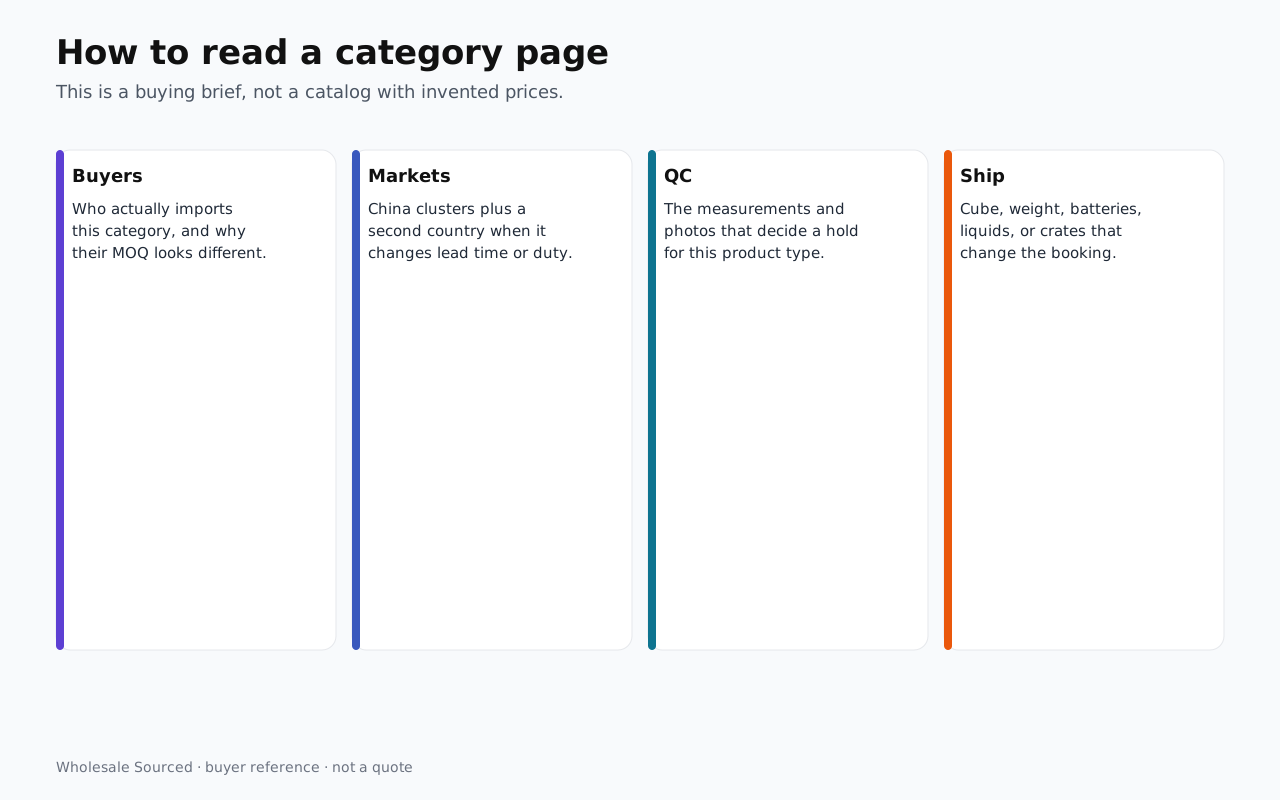
MOQ and pricing factors
Print and coating changes drive MOQ more than the blank does. A custom Pantone on a tumbler is not a stock color.
Quality control
- Dimensions, capacity, weight, material, finish, and color
- Lid fit, handles, moving parts, seals, coating, and decoration
- Set completeness, labels, retail-pack fit, and carton assortment
- Defined leak, operation, adhesion, or packing checks where relevant
Compliance and documents
Food-contact and electrical SKUs need destination tests. Do not reuse a cousin SKU report.
Shipping considerations
- Glass and stoneware need extra packaging weight
- Appliances may be measured cargo
- Sets must match the packing list
Frequently asked questions
What information makes kitchenware quotes comparable?
Give each supplier the same dimensions, capacity, material and grade where relevant, construction, finish, color, decoration, components, packing, quantity, destination, and required documents. For appliances, include voltage, frequency, plug, power, and functions.
Should the supplier test a finished retail set?
Yes. Approve and inspect the complete packed set so component counts, fit, printed copy, inserts, protection, and carton assortment can be checked along with the product itself.
Can an inspection prove food-contact or electrical compliance?
No. Inspection can compare the physical order with the approved specification and perform defined checks. Destination requirements, material claims, and electrical safety may require matching reports, laboratory testing, and professional review.