Source Apparel and Textiles from China
Turn a clothing idea into a quote-ready specification, approved size set, and inspectable production order for apparel and textile sourcing in China.
Two sweatshirts can look identical in a supplier catalog and still produce very different orders. Change the fabric weight, rib composition, size curve, print method, or packing, and the factory is no longer pricing the same garment. That is why a useful apparel sourcing page should start with the buying file, not a list of factory names.
Start with a garment the factory can price
Give every supplier the same construction notes, fabric composition and weight, color reference, size chart, tolerance, stitching details, decoration, trims, labels, packing, and quantity by color and size. State whether the factory must develop the pattern or follow a supplied pattern. If a feature is still open, label it as an option and ask suppliers to price the options separately.
A photo can show the silhouette. It cannot tell the factory the fabric weight, seam allowance, shrinkage allowance, zipper grade, or where a label must sit. Put those details into the wholesale RFQ template so every quote answers the same questions.
Find the MOQ inside the MOQ
Apparel minimums usually come from several processes. The sewing line may accept the order while the fabric mill, dye house, printer, zipper supplier, or woven-label maker does not. Ask which component creates the limit.
| Order decision | What can create a minimum | What to ask |
|---|---|---|
| Fabric | Mill run, stock availability, custom dye | Is the fabric stock, greige, or made to order? |
| Colors | Dye lot or cutting quantity per color | Can colors share fabric or decoration setup? |
| Sizes | Cutting ratio and bundle planning | What size curve was used in the quote? |
| Decoration | Screen setup, embroidery program, transfer sheet | What is the minimum per artwork and position? |
| Trims | Custom zipper, button, label, or packaging run | Which trim will leave excess stock? |
This breakdown gives you choices. A smaller trial might use an available fabric and standard trim. A larger program may justify custom dyeing and branded components. Product sourcing can compare factories against the same brief and show where their assumptions differ.
Approve a sample that production can follow
Do not approve a sample with comments scattered across email and chat. Mark each revision, record the measurements, and keep the approved fabric, color, decoration, trim, label, and finished piece together. If fit changes, issue a new measurement table rather than saying the body should be “slightly looser.”
A practical approval sequence is:
- Confirm fabric and color.
- Approve construction and fit on the first sample.
- Review a size set when grading matters.
- Approve decoration and labels on the real material.
- Sign the final sample and packing method before bulk production.
Before paying a deposit, verify the supplier and confirm whether cutting, sewing, dyeing, printing, washing, or embroidery will be subcontracted.
Inspect the order by size, color, and carton
An apparel inspection needs more than a workmanship check. Select units across colors and sizes, then compare measurements with the tolerance table. Check seams, symmetry, shade, spots, holes, skipped stitches, decoration, labels, assortment, folding, polybags, and carton marks. A random sample that happens to include only one size cannot represent a mixed-size order.
Visual inspection can confirm the garments match the approved file. It cannot prove every material or performance claim. Fiber composition, color fastness, restricted substances, and children’s product requirements may need suitable laboratory evidence. Use the quality control inspection guide to separate checks an inspector can perform from tests that need a lab.
Price the pack, not only the garment
Flat packing, hanging garments, individual boxes, tissue, inserts, and spare units all affect carton size and labor. Confirm the size and color assortment per carton so the receiver can put stock away without opening every box. Moisture control also needs attention before cartons are sealed.
If fabric, trims, and finished garments arrive from different suppliers, warehousing and consolidation can count and hold the components before final release. For private-label retail packaging, bring custom packaging into the sample stage instead of waiting until production is finished.
Send a brief we can work from
For a first review, send the product reference, tech pack or measurements, fabric requirement, quantities by color and size, decoration files, packaging, destination, and target date. We can tell you what is quote-ready, what still needs a decision, and which supplier assumptions should be tested before you compare prices. Request an apparel sourcing quote.
Product types
- Wholesale clothing
- Uniforms and workwear
- Bags
- Fabrics
- Footwear
- Sustainable programs
Typical wholesale buyers
- Brands
- Uniform programs
- Retailers
Main sourcing markets
- Guangdong and Fujian apparel
- Keqiao fabrics
- Vietnam and Bangladesh for cut-and-sew
Information graphic
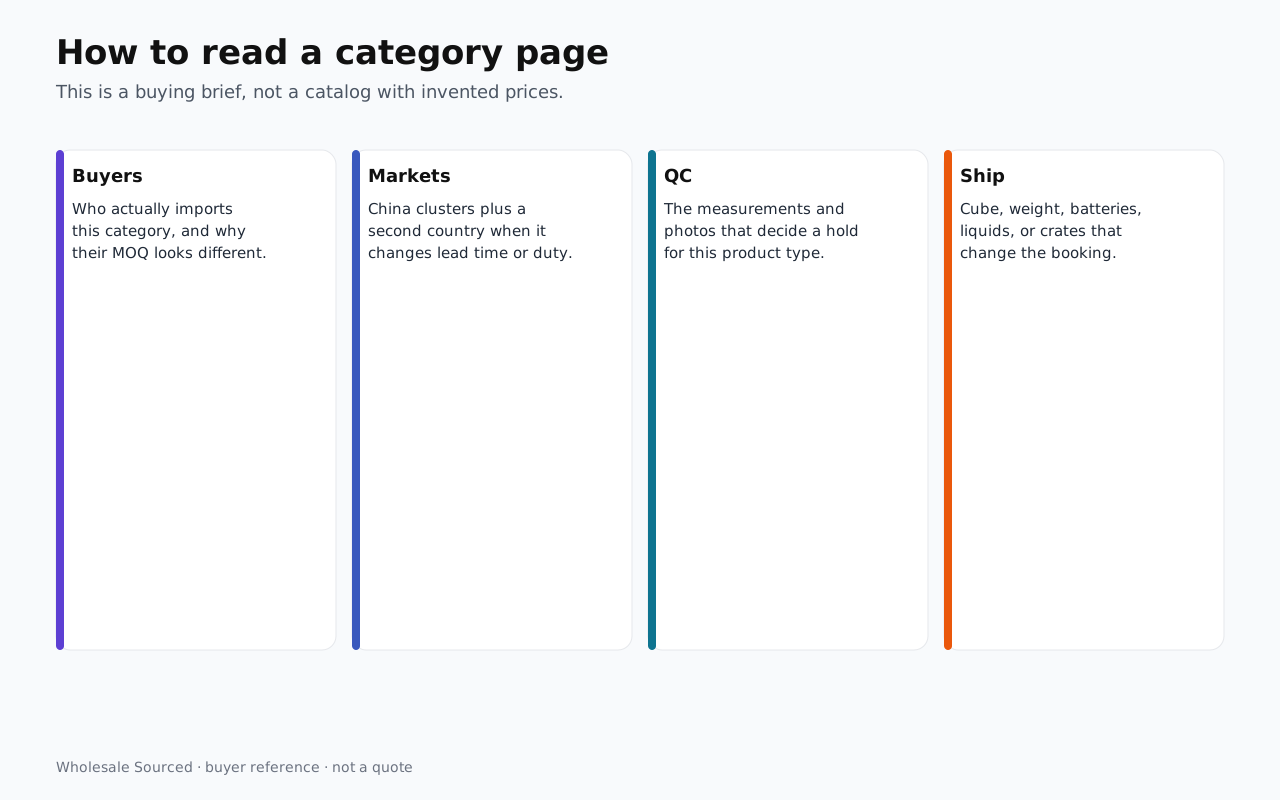
MOQ and pricing factors
Color and size runs create the real MOQ. A “200 pieces” quote that ignores size curve is not a quote.
Quality control
- Measurements by size against the approved tolerance
- Fabric shade, hand feel, weight, and visible defects
- Seams, stitch density, symmetry, and stress points
- Decoration position, labels, assortment, and carton marks
Compliance and documents
Fiber labels and kids’ wear rules are destination-specific. Recycled claims need a file, not a hangtag poem.
Shipping considerations
- Carton humidity
- Hanging vs flat
- Seasonal capacity crunches
Frequently asked questions
What does a factory need before it can quote clothing accurately?
At minimum, provide the garment construction, fabric composition and weight, size chart, quantity by color and size, decoration, labels, packing, destination, and required date. A reference photo helps, but it cannot replace those decisions.
Can several colors and sizes share one MOQ?
Sometimes, but the answer depends on fabric, dyeing, cutting, decoration, and trim minimums. Ask the supplier to show the minimum by fabric color, garment color, size, and decoration process instead of giving one total number.
What should an apparel inspection cover?
The inspection plan should cover measurements across selected sizes, workmanship, shade, decoration, labels, size and color assortment, packing, and carton condition. Laboratory tests may still be needed for composition, color fastness, or destination-market requirements.