A China DDP offer can put the wrong name on the US entry when the importer of record cell is still empty, and the buyer is left with a clearance file that will not open. This DDP China importer of record checklist writes the seller, the buyer, the consignee, and the filer on separate rows, and it leaves the filer cell blank until a document names the party who will file. Wholesale Sourced is an independent publisher, and the tables below are the checklist to copy.
Copy the seller, the buyer, the consignee, and the filer onto separate rows before you accept a China DDP offer. The October 11, 2026 UPS glossary calls Delivered Duty Paid an Incoterms rule and assigns the seller the risk, the costs, and the import clearances through a named place where the goods are available and ready for unloading. That glossary does not name the importer of record. The Cornell text of 19 USC 1484, fetched October 18, 2026, says the filer is the owner or purchaser, or a section 1641 licensee the owner, purchaser, or consignee appropriately designates. Paragraph (d)(1) says an electronic transmission is certified as true and correct to the best of the certifier’s knowledge and belief. The filled rows later on this page are hypothetical. They are not a shipment.
Copy the role sheet
Use one row per role. Write a name only when a document in front of you shows it. An empty name cell means the offer, the transport paper, or the reply did not give that name.
Rule of thumb. If the DDP line names the seller for import clearances and no document names the filer, leave the importer-of-record cell blank. Separate rows prevent the seller’s name from landing on that row when the offer only assigned import clearances.
The header and the blank rows are the record to copy. The filled tables under “Read a hypothetical offer” are a hypothetical file. Delete those filled rows before you use the sheet on a live order.
Scroll horizontally to see all columns →
| Offer reference | Named place of destination | Buyer | Seller |
|---|---|---|---|
Scroll horizontally to see all columns →
| Role | Name written on the paper | Document that shows the name | Reply status |
|---|---|---|---|
| Seller | |||
| Buyer | |||
| Consignee named for the shipment | |||
| Importer of record, the party who will file the entry | |||
| Agent authorized in writing by the qualifying party | |||
| Person holding a valid license under 19 USC 1641, when that person is the designated filer | |||
| For an electronic filing, which of the importer of record or the agent is resident in the United States for service of process |
The license-number cell is not on this role sheet. If a later reply prints a license number, copy it onto the reply row. If it does not, leave that cell blank. This page does not say what a valid license looks like, and it does not restate section 1641.
Before you copy a Chinese seller name onto the seller row, match the legal name on the guide to checking a Chinese supplier’s legal name. That guide does not name the US filer.
What the DDP line covers
The UPS glossary URL was requested once on October 18, 2026. The server returned an Access Denied page, so the sentences in this section follow the glossary wording already on this page from the October 11, 2026 fetch.
On that glossary, Delivered Duty Paid is an Incoterms rule for any form of transport: air, ocean, ground, or multimodal. UPS says the seller is responsible for all risk and costs associated with shipping and delivering the goods to a named place of destination, often the buyer’s place of business, including export clearance, transport costs, and import clearances. Risk and costs transfer from the seller to the buyer when the seller makes the goods available, ready for unloading, at that named place.
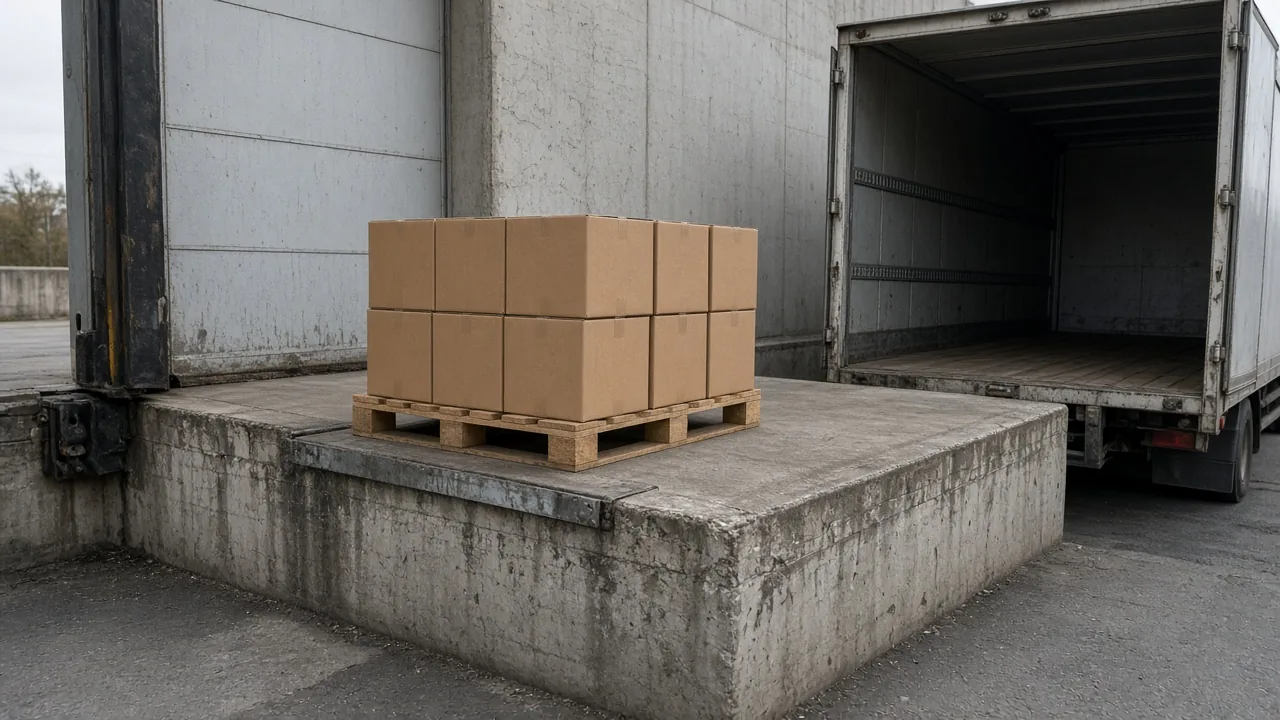
Write the named place in the header exactly as the offer prints it. UPS ties the transfer of risk and costs to that place, at the moment the goods are available and ready for unloading. A city name with no street, warehouse, or other place is an unfinished header. Leave the missing words blank.
The same UPS page says sellers may raise the price to cover the extra costs of this method. No price is printed on this checklist. When a document already names an amount, carry that amount into the landed cost formula and enter it in the landed cost calculator. Those tools add charges. They do not name the filer.
UPS also says sellers should be cautious because they may not be in a position to obtain import clearances in the destination country, and that some countries require a local presence for the entities that conduct import formalities. That is UPS’s general statement. It is a glossary sentence, and it does not name the importer of record on a particular US shipment.
Where a seller anticipates difficulty with import formalities, UPS says the parties may be better off choosing DAP or DPU. This page does not compare those rules with EXW. UPS says an Incoterms rule in a contract of sale creates legal obligations, and it points readers to the ICC site for the full wording. This page did not open the ICC Incoterms 2020 text. Use the UPS sentences above for the DDP line.
Who can file the US entry
The statute text below is the Cornell Legal Information Institute page for 19 U.S. Code section 1484, fetched October 18, 2026. The response last-modified header was August 12, 2025. This check did not fetch a House reprint that day. The page used here is the Cornell text.
Section 1484(a)(1) starts with an exception list: sections 1490, 1498, 1552, and 1553. This page does not summarize those four sections. Apart from that exception, one of the parties qualifying as “importer of record” under paragraph (2)(B), either in person or by an agent authorized by the party in writing, shall, using reasonable care, make entry and complete the entry. This page does not define reasonable care and does not grade a file against it.
Making entry, in paragraph (a)(1)(A), means filing with the Bureau of Customs and Border Protection the documentation or, through an authorized electronic data interchange system, the information needed for that bureau to determine whether the merchandise may be released from its custody. The Cornell page prints a footnote after that subparagraph: “So in original. The word and probably should appear at end.” The footnote is the page’s note on the punctuation. It is not a separate filing rule.
Completing the entry, in paragraph (a)(1)(B), means filing with the Customs Service the declared value, the classification and rate of duty applicable to the merchandise, and the other documentation or information needed so Customs can assess duties, collect statistics, and determine whether any other applicable requirement of law, other than release from customs custody, is met. The same paragraph allows a substitute of one or more reconfigured entries on an import activity summary statement, filed the same way. This page supplies no value, no classification, and no rate. Copy a figure into the table only when the filing document prints it.
Scroll horizontally to see all columns →
| Declared value | Classification | Rate of duty |
|---|---|---|
Paragraph (a)(2)(B) says the required documentation or information shall be filed or electronically transmitted either by the owner or purchaser of the merchandise or, when appropriately designated by the owner, purchaser, or consignee of the merchandise, by a person holding a valid license under section 1641. For the purposes of that chapter, the importer of record must be one of the parties who is eligible to file the documentation or information required by this section. Write on the checklist row which of those the paper names. If the paper names none of them, the row stays blank.
The written authorization of an agent and the designation of a section 1641 licensee are two writings. Paragraph (a)(1) lets the qualifying party act in person or by an agent that party authorizes in writing. Paragraph (a)(2)(B) lets a designated licensee file when the owner, purchaser, or consignee appropriately designates that person. A reply that contains one writing leaves the other cell blank.
The same paragraph says that when a consignee declares on entry that he is the owner or purchaser of merchandise, the Customs Service may, without liability, accept the declaration. Record that declaration only when the entry paper itself shows it. A consignee name on a transport document stays on the consignee row.
An electronic filing under 19 USC 1484(d)(1), on the Cornell page fetched October 18, 2026, is certified as true and correct to the best of the certifier’s knowledge and belief. Paragraph (d)(1) says entries shall be signed by the importer of record, or his agent, unless filed through an electronic data interchange system. If the entry is filed electronically, each transmission of data shall be certified by an importer of record or his agent, one of whom shall be resident in the United States for purposes of receiving service of process. The transmission is binding in the same manner and to the same extent as a signed document. The resident is one of those two people. Leave the residence cell blank when the reply does not say which one it is. A China address on the offer, or a US delivery address, does not fill that cell.
Paragraph (a)(2)(A) says the documentation or information required under paragraph (1) shall be filed or transmitted in the manner and within the time periods the Secretary prescribes by regulation. This page did not fetch that regulation, so an unprinted filing date stays blank. The same paragraph sets an outer limit for a narrower set of filings: import activity summary statements, and reconfigured entries, covering merchandise released under a special delivery permit pursuant to section 1448(b) and entries or warehouse withdrawals made during a calendar month. For that set, the regulatory period is not to exceed the 20th day following such calendar month. That ceiling is not a due date for every China DDP offer. The same paragraph says entries filed under paragraph (1)(A) shall not be liquidated if an import activity summary statement covers them, and that each reconfigured entry is then subject to liquidation or reliquidation under sections 1500, 1501, or 1504. This page does not summarize those three sections.
Paragraph (b)(1) says a party may elect to file a reconciliation for entry elements the party identifies under regulations the Secretary prescribes. If the party elects, the importer of record files the reconciliation not later than 21 months after the date the importer declares the intent to file it. For issues relating to the assessment of antidumping and countervailing duties, the reconciliation shall be filed not later than 90 days after the date the Customs Service advises the importer that the period of review has been completed. Before filing a reconciliation, an importer of record shall post bond or other security pursuant to such regulations as the Secretary may prescribe. The paragraph prints no bond amount. Leave the amount blank. Leave the whole reconciliation row blank when the papers do not elect one.
Paragraph (d)(1) also says the entry shall be accompanied by such invoices, bills of lading, certificates, and documents, or their electronically submitted equivalents, as are required by regulation. Paragraph (e) says the Secretary may provide by regulation for the production of an invoice. This page did not fetch those regulations. Paragraph (d)(2) says the Secretary’s regulations on entry documentation shall require information needed to determine whether the imported merchandise bears an infringing trademark on the goods or the packaging. This sheet does not decide infringement.
Section 1641 appears here as the cross-reference in paragraph (a)(2)(B). This page does not restate broker rules from that section, and it does not print a sample license number.
Documents to collect before you accept the offer
Copy this second table next to the role sheet. Each row is a paper or a fact you still need. “No reply” is a finished status. It means you asked in writing and the answer did not come. You still leave the name cell blank.
Scroll horizontally to see all columns →
| Item | Why it is on this sheet | If there is no reply |
|---|---|---|
| Named place of destination, as printed | The October 11 UPS glossary ties the transfer of risk and costs to the goods being available, ready for unloading, at that place. | |
| Who the offer names for import clearances | That glossary describes those clearances as the seller’s responsibility under DDP. | |
| Who will file the US entry | Section 1484(a)(1) requires a qualifying importer of record to make entry, aside from the four sections this page does not summarize. | |
| Written authorization, if an agent will file | Section 1484(a)(1) allows the qualifying party to act by an agent authorized by that party in writing. | |
| Whether the filer is the owner, the purchaser, or a designated licensee under section 1641 | Section 1484(a)(2)(B) lists those eligible filers and uses the words “appropriately designated.” | |
| License number, if a licensee is the filer | The statute text requires a valid license under section 1641 for that designated person. It displays no number format. | |
| For an electronic entry, who certifies the transmission, and which of the importer of record or the agent is resident in the United States for service of process | Section 1484(d)(1) requires the certification to be true and correct to the best of the certifier’s knowledge and belief, and it requires one of those two people to be the resident. | |
| Invoices, bills of lading, certificates, and documents, or the electronic equivalents, that regulation requires with the entry | Section 1484(d)(1) names those accompaniments and leaves the list to regulation. This page did not fetch the regulation. | |
| Whether the reply completes the entry itself or substitutes reconfigured entries on an import activity summary statement | Section 1484(a)(1)(B) names both paths. | |
| Filing date the reply prints | Section 1484(a)(2)(A) assigns the time periods to regulations. An unprinted date stays blank. The 20th-day ceiling in that paragraph applies only to the summary-statement and calendar-month filings described there. | |
| Reconciliation election, if any, and the bond or other security | Section 1484(b)(1) has the importer of record file an elected reconciliation and post bond or other security. It prints no amount. | |
| Entry record the other party agrees to hand over | The statute text used here says the entry is filed with Customs. Those sentences do not require the buyer to receive a copy. Record only what the other party agrees to provide. |

Keep the DDP offer and the entry record as two files. The thin stack in the photograph is not an offer, and the thick stack is not an entry. The gap on the desk is the same split as the sheet: words on the offer stay on the offer until a separate record shows the entry.
The commercial invoice and the packing list are a third file. Match those lines on the invoice and packing list cross-check. Paragraph (d)(1) says the entry is accompanied by invoices and bills of lading as regulation requires. The cross-check matches invoice lines to carton numbers. It does not fill the importer-of-record row.
If the cargo is going to Amazon, carton labels and the shipment plan stay on the China to Amazon FBA guide. That guide does not fill this role sheet.
Read a hypothetical offer
Every name below is made up. Harbor Lot Supply, Northline Retail, and West Door Brokerage are not real firms. No license was checked. Do not copy these names onto a live file. This filled example is hypothetical. It is not a real shipment.
The offer is one page. It says “DDP, Los Angeles warehouse,” and it says the seller handles import clearance. It names the seller and the buyer. It does not name a consignee, a filer, an agent, or a license number. It does not attach an entry record, elect a reconciliation, or print a value, a classification, or a rate of duty. “Los Angeles warehouse” has no street, so the named-place header is unfinished even though those words are on the page.
Scroll horizontally to see all columns →
| Role or item | What the offer shows | Reply status |
|---|---|---|
| Seller | Harbor Lot Supply | Named on the offer |
| Buyer | Northline Retail | Named on the offer |
| Named place | Los Angeles warehouse | Printed on the offer. No street, so the header is unfinished. |
| Import clearances, as the offer describes them | Seller | Named on the offer. This is the DDP line. |
| Consignee | No reply | |
| Importer of record | No reply | |
| Agent authorized in writing | No reply | |
| License number | No reply | |
| Declared value, classification, rate of duty | No reply | |
| US resident for service of process, if the entry will be electronic | No reply | |
| Certification of an electronic transmission | No reply | |
| Reconciliation election and bond amount | No reply | |
| Entry record | No reply |
Read the import-clearance row and the importer-of-record row as different facts. The offer follows the UPS description when it puts import clearances on the seller. The filer cell is still empty. Harbor Lot Supply stays on the seller row.
A later email, still hypothetical, says Northline Retail is the purchaser and will be the importer of record. It says West Door Brokerage will file as Northline’s agent, and it attaches a one-page authorization signed by Northline. It says the entry will be electronic, that the agent will certify the transmission as true and correct to the best of the agent’s knowledge and belief, and that the agent is the person resident in the United States for service of process. It promises a copy of the entry record after filing. It does not print a license number, a declared value, a classification, a duty rate, or a bond amount. It does not elect a reconciliation. The entry copy has not arrived.
After that email, the filer cell reads “Northline Retail, purchaser.” The agent cell reads “West Door Brokerage,” with the authorization attached. The residence cell reads “agent.” The certification cell reads “agent, true and correct to the best of the agent’s knowledge and belief.” The license-number cell stays blank. The value, classification, duty-rate, and bond cells stay blank. The entry-record cell reads “promised, not yet received,” and the reference cell stays blank until the copy arrives. The email does not decide that the arrangement meets section 1641. It only fills the cells the email actually answered.
Where this check stops
Stop when every role row either has a name from a document or is marked “no reply,” and when the document table shows the same for the named place, the filer type, the written authorization, the residence cell, the certification, the license number, the filing path, the filing date, the reconciliation row, and the entry record. A blank that you filled from memory is not a finished row.
This check states no duty rate, no bond amount, and no penalty. It chooses no classification. It states no conclusion about whether a DDP seller can clear a particular US shipment. UPS’s remark about local presence stays a general sentence from the October 11 glossary. The consignee row and the importer-of-record row stay separate. This page does not summarize 19 USC 1490, 1498, 1552, 1553, or 1641, and it does not summarize sections 1500, 1501, or 1504. Subsection (i) is a special rule for merchandise withdrawn from a foreign trade zone. This checklist does not apply that subsection to an ordinary China DDP offer.
The Cornell page is the text used here. It is not a House reprint, and this check did not fetch one on October 18, 2026.
The freight and logistics category holds the other shipping checks. The sourcing guides hold the rest of the buying sequence. Use this sheet when a China offer says DDP and you still need the filer, the written agent, and the entry record written down.
How this page was checked
The DDP sentences follow the UPS Supply Chain Solutions glossary fetched October 11, 2026, limited to the definition, the modes of transport, the transfer of risk and costs, the seller’s clearance responsibilities, the price caution, the local-presence sentence, the DAP or DPU remark, and the statement that an Incoterms rule in a contract of sale creates legal obligations. The same glossary URL was requested once on October 18, 2026, and the response was an Access Denied page, so no new UPS sentence was added. The entry sentences follow the Cornell LII text of 19 USC 1484 fetched October 18, 2026, including paragraphs (a)(1), (a)(1)(A), (a)(1)(B), (a)(2)(A), (a)(2)(B), (b)(1), (d)(1), (d)(2), and (e), plus the footnote printed after (a)(1)(A). The response last-modified header was August 12, 2025. No shipment was filed for this article. Updated October 2026.
Frequently asked questions
Who is the importer of record on a DDP shipment?
The October 11 UPS glossary does not name that party. On the Cornell page for 19 USC 1484 fetched October 18, 2026, paragraph (a)(2)(B) says the importer of record must be one of the parties eligible to file the documentation or information this section requires: the owner or purchaser, or, when appropriately designated by the owner, purchaser, or consignee, a person holding a valid license under section 1641. If the offer names none of those, leave the cell blank.
Do I still need an importer of record if I'm using DDP shipping?
Section 1484(a)(1) says one of the parties qualifying as importer of record shall make entry, using reasonable care, except as provided in sections 1490, 1498, 1552, and 1553. This page does not summarize those four sections. The October 11 UPS glossary assigns import clearances to the seller under Delivered Duty Paid. That contract description sits on a different row from the filer.
What are DDP Incoterms in shipping?
The UPS glossary fetched October 11, 2026, calls Delivered Duty Paid an Incoterms rule for air, ocean, ground, or multimodal transport. The seller is responsible for all risk and costs of shipping and delivering the goods to a named place of destination, including export clearance, transport costs, and import clearances. Risk and costs transfer when the goods are available, ready for unloading, at that place. A request for that glossary on October 18, 2026 returned Access Denied, so this answer uses the October 11 wording. This page did not open the ICC Incoterms 2020 text.
Sources
- 19 U.S. Code § 1484 - Entry of merchandise : Legal Information Institute, Cornell Law School Accessed October 18, 2026.
- Delivered Duty Paid (DDP) definition : UPS Supply Chain Solutions Accessed October 11, 2026.